
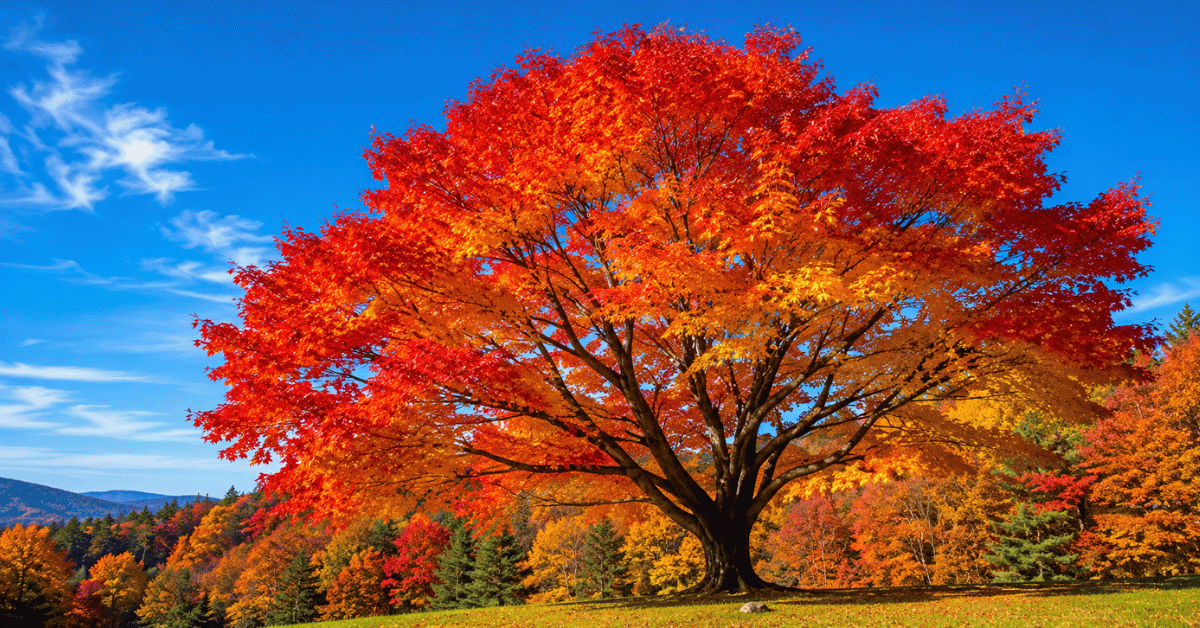
Quick answer: Leaves change color in autumn because trees stop making chlorophyll, the green pigment, as days get shorter and cooler. As the chlorophyll breaks down, yellow and orange carotenoid pigments that were in the leaf all along become visible. Some trees also make new red and purple anthocyanin pigments from sugars trapped in the leaf.
Why do leaves change color in autumn when they spent the entire spring and summer green? The colors you see every fall were not created by cold weather. They were hidden inside the leaf all along.
Trees begin preparing for winter weeks before temperatures drop significantly. The trigger is not cold. It is the shortening of daylight hours. As the days grow shorter after the summer solstice, trees detect the change in light duration and begin a controlled, precise shutdown process that produces the most spectacular color display in the natural world.
Why do leaves change color? Leaves are green all summer because chlorophyll, the pigment used for photosynthesis, dominates all other pigments. As days shorten in autumn, trees stop producing chlorophyll. It breaks down and fades, revealing yellow and orange pigments that were present in the leaf all summer but masked by the green. Red pigments are newly produced as sugars become trapped in the leaf. The mix of these pigments creates autumn color.
The full mechanism involves four separate pigments, a physical barrier built by the tree, and a chemical process that scientists still do not fully understand. Each piece of the process connects to the same survival strategy that has kept deciduous trees alive through millions of winters.
Why Do Leaves Change Color: The Trigger
Trees do not wait for frost to begin their autumn shutdown. By the time temperatures drop, the process is already well underway.
The primary trigger is photoperiodism, a plant’s ability to detect and respond to the length of daylight. Leaves contain light-sensitive proteins called phytochromes that measure the duration of darkness each night. As nights grow longer after the summer solstice in late June, those proteins register the change. By late summer, the signal crosses a threshold specific to each tree species, and the shutdown begins.
Temperature reinforces the light signal. Cool nights accelerate the process. Warm nights delay it. Drought can trigger early shutdown by stressing the tree before light signals would normally activate dormancy. This is why autumn color varies so significantly from year to year even in the same location. The timing and intensity of color depend on the specific combination of light duration and temperature through late summer and early autumn.
NOAA’s environmental satellite data service confirms that shorter days are the primary trigger for leaf color change, with temperature acting as an accelerant or brake on the process.
The Four Pigments Behind Autumn Color
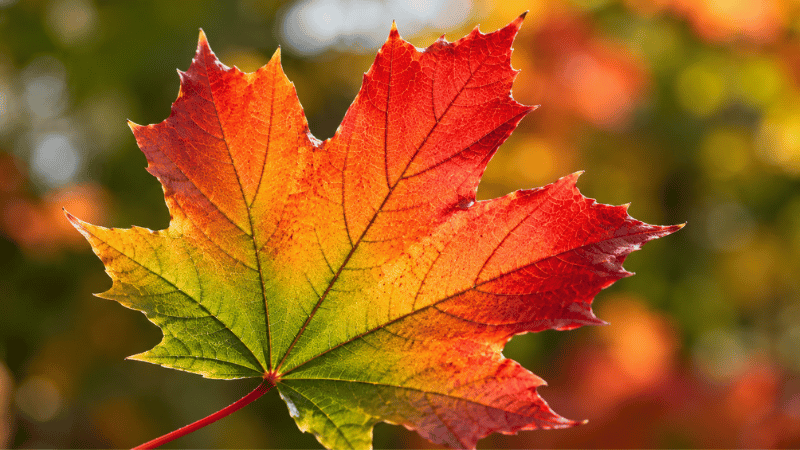
All four autumn pigments are present in every deciduous leaf. What changes in autumn is which pigments dominate the color the leaf shows.
Chlorophyll: The green that hides everything
Chlorophyll is the molecule that captures sunlight and powers photosynthesis. It absorbs red and blue wavelengths of light and reflects green, which is why leaves look green. During spring and summer, trees produce chlorophyll continuously. The concentration is so high that it overwhelms all other pigments in the leaf, making the entire leaf appear uniformly green.
Chlorophyll is expensive to produce. It requires nitrogen, which is a limited resource for trees. As days shorten, trees stop investing nitrogen in chlorophyll production. The existing chlorophyll molecules begin to break down in sunlight without being replaced. As the green fades, the other pigments become visible for the first time.
Carotenoids: The yellows and oranges that were always there
The Smithsonian Institution explains that yellow and orange pigments called carotenoids are present in leaves throughout the growing season, hidden beneath the concentration of green chlorophyll. These are the same carotenoids that make carrots orange, corn yellow, and bananas yellow. They are stable pigments that do not break down with the chlorophyll.
When chlorophyll fades in autumn, carotenoids are simply revealed rather than newly produced. They were there all summer. The warm golds of aspen, birch, and hickory are carotenoids that have been waiting under the green since spring.
Anthocyanins: The reds that are freshly made
Red and purple autumn colors come from anthocyanins. Unlike carotenoids, anthocyanins are not present in leaves during summer. They are produced specifically in autumn, which is one of the more puzzling aspects of leaf color change. Producing a new pigment requires energy at the exact time a tree is trying to conserve resources.
Anthocyanins form when sugars become trapped in the leaf during the abscission process. Sunlight acts on those trapped sugars and converts them into red anthocyanin pigments. This is why the sunniest leaves on a tree often display the most intense reds, and the shaded leaves underneath tend toward yellows and browns. It is the same process that makes apples red only on the side that faces the sun.
Tannins: The browns that signal the end
Tannins are bitter-tasting compounds that trees produce to deter insects from eating their leaves. They are present all summer and give tea its brown color. As other pigments break down through autumn, tannins remain stable and produce the brown and tan colors of oak, beech, and some maple leaves. Brown is not a vibrant autumn color, but it is the dominant color of the final stage of leaf senescence in many species.
How the Abscission Zone Traps Sugar and Creates Red
The mechanism that produces red leaves is one of the most precise biological processes in the autumn sequence, and most articles about leaf color skip over it or describe it inaccurately.
As autumn begins, trees build a layer of specialized cells at the base of each leaf stem where it connects to the branch. This layer is called the abscission zone. It is a corky wall of cells that gradually seals the connection between the leaf and the tree, cutting off the supply of water and nutrients flowing into the leaf and restricting the flow of sugars out of it.
During summer, leaves produce sugars through photosynthesis and send most of them down into the trunk and roots for storage. As the abscission zone seals off, those sugars can no longer leave the leaf efficiently. They become trapped. Sunlight acting on those concentrated trapped sugars drives the chemical reactions that produce anthocyanins.
The result is that the most sun-exposed leaves, with the highest trapped sugar concentration, produce the most vivid reds. Shaded interior leaves produce yellows from carotenoids instead. A single tree can display a full gradient of color from deep red at the canopy edges to yellow and green in the interior, all because of differences in how much sunlight reaches each leaf and how much sugar becomes trapped.
The abscission zone is also what eventually causes the leaf to fall. When the wall is complete and the leaf fully isolated, it takes only a light wind or the weight of rain to separate the leaf from the branch. The tree has already sealed the wound. The branch tissue heals cleanly, leaving only a small leaf scar.
Why Scientists Do Not Fully Understand Red Leaves
Yellow and orange autumn colors have a straightforward explanation: carotenoids were always there, now revealed. The red colors are more puzzling.
Producing anthocyanins requires energy. Autumn is the season when trees are trying to conserve every resource to survive winter. Spending energy on a new pigment at this moment seems counterproductive. Researchers have proposed several competing theories to explain why trees bother.
Rutgers University plant biologists explain the leading hypotheses:
- Sunscreen theory: Anthocyanins absorb high-intensity light that could damage leaves while the tree is still retrieving valuable nutrients. The red pigment acts as a shield, allowing the tree to recover more nitrogen and phosphorus from the leaf before it falls.
- Insect deterrence theory: Oxford biologist William Hamilton proposed that vivid autumn color signals tree health to aphids, which choose where to lay their overwintering eggs in late autumn. Healthier trees signal with more vivid color, warning aphids that they are well-defended with chemical compounds. Aphids preferentially lay eggs on duller, less colorful trees.
- Antioxidant theory: Anthocyanins neutralize free radicals produced by the breakdown of chlorophyll. Without this protection, the breakdown byproducts could damage leaf cells before the tree finishes recovering nutrients.
No single theory has been conclusively proven. The honest scientific answer is that trees produce red anthocyanins in autumn, those pigments appear to serve protective functions, but the precise evolutionary reason for the behavior remains an active research question.
Why Different Trees Turn Different Colors
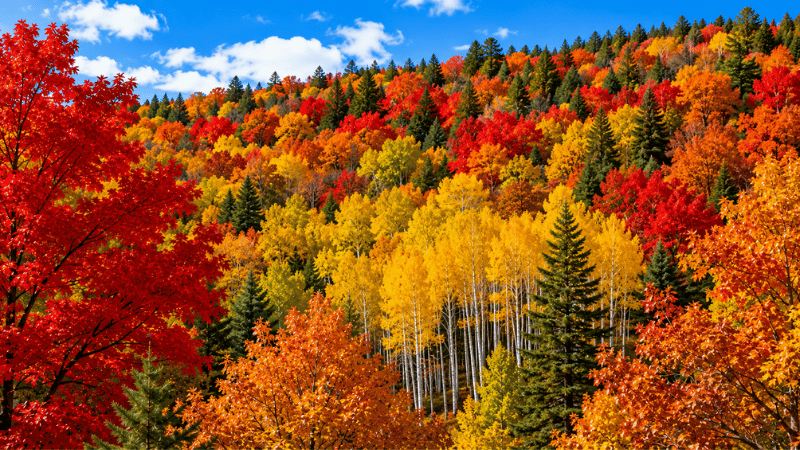
Every deciduous tree goes through the same basic process in autumn, but the resulting color depends on the specific mix of pigments that species produces.
- Sugar maple: Produces intense red and orange because it generates high concentrations of trapped sugar and strong anthocyanin production. The brilliant orange of sugar maple comes from the combination of red anthocyanins and yellow carotenoids.
- Aspen and birch: Produce predominantly yellow and gold because they generate carotenoids abundantly but have limited anthocyanin production. Their autumn color is a reveal of what was always there.
- Oak: Tends toward brown and dull red because tannins dominate the final stage of pigment breakdown. Oaks produce some anthocyanins but not enough to overcome the tannin color.
- Sweetgum and dogwood: Produce deep purple and crimson because they generate high anthocyanin concentrations combined with specific tannin compounds.
- Ginkgo: Turns uniformly brilliant gold because it contains high carotenoid levels and produces almost no anthocyanins. All ginkgo leaves on a single tree often change color simultaneously and drop within a few days of each other, an event known as the ginkgo drop.
Within a single species, conditions vary enough to produce different colors on different individual trees. Soil chemistry, drainage, moisture availability, and microclimate all affect how a tree responds to the autumn trigger.
What Weather Conditions Create the Most Vivid Autumn Color
Autumn color intensity varies dramatically from year to year. Understanding what drives that variation is useful for anyone hoping to time a visit to see peak foliage.
The USDA Forest Service identifies the conditions that produce the most vivid color:
- Warm sunny days and cool nights: Sunny days maximize sugar production through ongoing photosynthesis. Cool nights accelerate the sealing of the abscission zone and drive sugar trapping in the leaf. The combination produces maximum anthocyanin formation and the most intense reds.
- Adequate summer rainfall: Trees that have had sufficient moisture throughout the growing season produce more sugars and enter autumn in better condition. Drought-stressed trees often produce dull, early color as they shut down prematurely.
- No early hard frost: A hard frost before color peaks kills the anthocyanin-producing process and collapses the sugar chemistry. The leaves turn brown and fall without producing the red stage. A freeze after color peaks causes rapid leaf drop, shortening the season dramatically.
- Calm, dry conditions after peak: Wind and heavy rain tear leaves from branches before they complete their color change. Calm dry days extend the peak display.
Why Evergreen Trees Do Not Change Color
Walk through any autumn forest and you will see conifers, pines, spruce, fir, and hemlock, staying green while the deciduous trees around them turn red and gold. They are not immune to the season. They have evolved an entirely different winter strategy.
Evergreen needles are covered in a thick waxy coating that dramatically reduces water loss in cold dry winters when frozen soil prevents roots from absorbing water. The needle shape itself reduces surface area and wind resistance compared to broad leaves. The fluid inside needle cells contains compounds that lower the freezing point, providing some frost protection.
These adaptations allow conifers to continue photosynthesis at reduced levels throughout winter whenever temperatures rise above freezing. Rather than abandoning their leaves and rebuilding them every spring, conifers maintain a continuous set of needles, each lasting two to four years before being replaced gradually.
The metabolic cost of retaining and protecting needles through winter is lower than the cost of rebuilding an entire leaf canopy from scratch every spring, which is what deciduous trees must do. Both strategies have succeeded across millions of years in different climatic niches. Deciduous trees dominate where winters are severe enough to make maintaining leaves too costly. Conifers dominate where winters are cold and dry but soils and light conditions favor year-round photosynthesis.
How Climate Change Is Altering Autumn Color
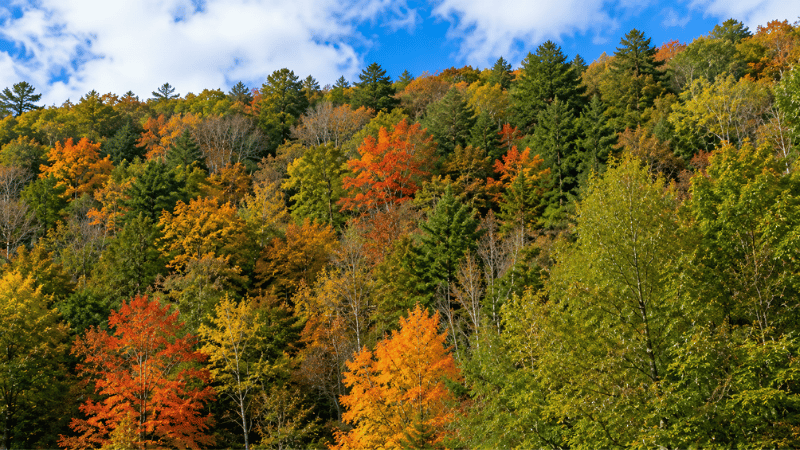
The autumn color display is changing in measurable ways across the Northern Hemisphere, and the changes are not improvements.
Climate Central’s research on fall foliage trends shows that autumn nights have warmed by an average of 2.7 degrees Fahrenheit across 212 United States locations between 1970 and 2023. Warmer nights reduce the temperature contrast that drives anthocyanin production. The result is duller reds, less intense color, and a later, shorter peak foliage window.
Research from Boston University plant ecologist Richard Primack, published in PBS NewsHour, shows that trees in the northeastern United States and in Europe and Japan are holding their leaves later into autumn by roughly one week compared to observations from several decades ago. This delays peak color but also reduces the quality of the color display because warmer autumns produce less anthocyanin.
Extended drought, which is becoming more frequent with climate warming, forces trees into early dormancy before the full color sequence can develop. Leaves skip the red stage and go directly to brown as the tree shuts down under water stress.
The leaf-peeping industry, which generates billions of dollars annually across New England, the Appalachians, and the upper Midwest, is already seeing economic impacts from shortened and dulled foliage seasons. Leaf color is both a biological process and an economic resource, and both are changing.
These disruptions connect directly to the wider patterns of atmospheric instability and extreme weather events affecting foliage timing that affect ecosystems well beyond the autumn foliage season.
Why Leaves Change Color at Different Times in Different Places
Autumn color does not arrive everywhere at once. It moves through landscapes in predictable waves, and the pattern reveals how trees interpret light and temperature signals.
Latitude matters most. Northern regions receive fewer daylight hours earlier in autumn because the angle of the Earth’s axis causes days to shorten faster at higher latitudes. Trees in Canada and the northern United States begin color change weeks before trees at the same elevation further south.
Elevation matters nearly as much. Mountain forests sit in cooler air and experience stronger temperature drops at night than nearby valley forests. High-altitude trees begin color change earlier and finish it faster. A single mountain can show peak autumn color at its summit weeks before the color arrives at its base.
Aspect, the direction a slope faces, adds another layer. North-facing slopes receive less direct sunlight and stay cooler, triggering color change earlier. South-facing slopes are warmer and stay green longer. Standing on a mountain in early autumn, you can sometimes see a clear line where the north face has turned color and the south face remains green. This same interplay between light, temperature and biological timing connects to the larger science of how Earth’s seasonal cycles affect living systems, including why the sky itself changes appearance as seasons shift the sun’s angle.
Frequently Asked Questions
Why do leaves change color before they fall?
The color change happens because trees actively reclaim nutrients from leaves before dropping them. Chlorophyll breaks down first, revealing and producing other pigments. This nutrient recovery process, particularly the reabsorption of nitrogen, is the primary purpose of autumn senescence. The color is a byproduct of the chemistry, not the goal.
Why are some autumn colors more vivid than others each year?
The Smithsonian’s autumn foliage science page explains that vivid reds require warm sunny days combined with cool nights and adequate soil moisture from summer rainfall. Years with dry summers, warm autumn nights, or early frosts produce dull, muted color. The best displays follow summers with good rainfall, warm September days, and cold but not freezing October nights.
Do tropical trees change color in autumn?
Most tropical trees are evergreen and do not follow the temperate autumn color cycle because they do not experience the dramatic day-length changes that trigger dormancy at mid-latitudes. Some tropical trees shed leaves during dry seasons rather than cold seasons, which serves the same water-conservation purpose. A few tropical species produce anthocyanins in young leaves rather than in autumn, giving their new growth a red flush that fades to green as the leaves mature.
Why do leaves turn yellow before they turn red?
Yellow comes first because carotenoids are revealed as chlorophyll breaks down. Carotenoids are always present and simply become visible. Red anthocyanins are produced later in the process, after the abscission zone seals and sugars begin accumulating in the leaf. On most trees, yellow precedes red by days to a couple of weeks. Some trees, particularly maples, can go directly to red if conditions are right for rapid anthocyanin production.
Why do leaves on the same tree turn different colors?
Position on the tree determines sun exposure, which drives anthocyanin production from trapped sugars. Outer canopy leaves receive full sunlight and produce the most vivid reds. Inner shaded leaves receive less light and tend toward yellow. Leaves near the trunk and major branches, where the abscission zone seals later, often stay green longer than outer leaves. The tree displays a spectrum of color simultaneously because every leaf exists in a slightly different microenvironment.
Can autumn color change predict winter weather?
The intensity and timing of autumn color reflects recent weather conditions but does not predict future weather. An early and vivid color change tells you the tree sensed strong light and temperature signals and that autumn has arrived with distinct cool nights. A late, dull color change tells you nights have been warm. Neither directly predicts winter severity. The folk saying that vivid autumn color means a harsh winter has no scientific support. The color reflects what has already happened in the atmosphere, not what is coming.
Why do some trees keep their brown leaves all winter?
Some trees, particularly young beeches and certain oaks, retain their dead brown leaves through winter in a phenomenon called marcescence. The leaves die and turn brown but the abscission zone does not complete its final separation. The exact reason is debated. Some researchers suggest it deters deer from browsing on the young branches by making the tree less accessible. Others suggest the retained leaves provide some insulation to buds through winter. The leaves fall in early spring as new growth pushes them off.
Is leaves changing color a chemical change?
Yes. Autumn color comes from chemical reactions: chlorophyll molecules are broken down, and in many trees new red anthocyanin pigments are made from sugars in the leaf. New substances form, which is what makes it a chemical change rather than a physical one.
The One Paragraph Answer
Leaves change color because trees prepare for winter by stopping chlorophyll production as days shorten. Chlorophyll breaks down and its green disappears, revealing yellow and orange carotenoid pigments that were present all summer but hidden. At the same time, a layer of cells called the abscission zone seals the connection between leaf and branch, trapping sugars in the leaf. Sunlight converts those trapped sugars into red anthocyanin pigments, creating the vivid reds and purples of autumn. The specific color a tree displays depends on which pigments it produces most, what the weather has been, and how much sunlight each individual leaf receives. Cool sunny days and cold nights produce the most intense color. Warm nights, drought, and early frost produce dull color or skip the red stage entirely. Climate change is warming autumn nights, reducing red pigment production, and shortening the peak foliage season across the Northern Hemisphere. The colors of autumn are not decoration. They are the visible chemistry of a tree efficiently dismantling its leaves to survive another winter.
Related articles
- 10 extraordinary facts about plants
- Why is the sky blue?
- 10 amazing natural phenomena
- 10 secrets of the natural world
Sources
- NOAA's environmental satellite data service
- The Smithsonian Institution
- Rutgers University plant biologists
- The USDA Forest Service
- Climate Central's research on fall foliage trends