
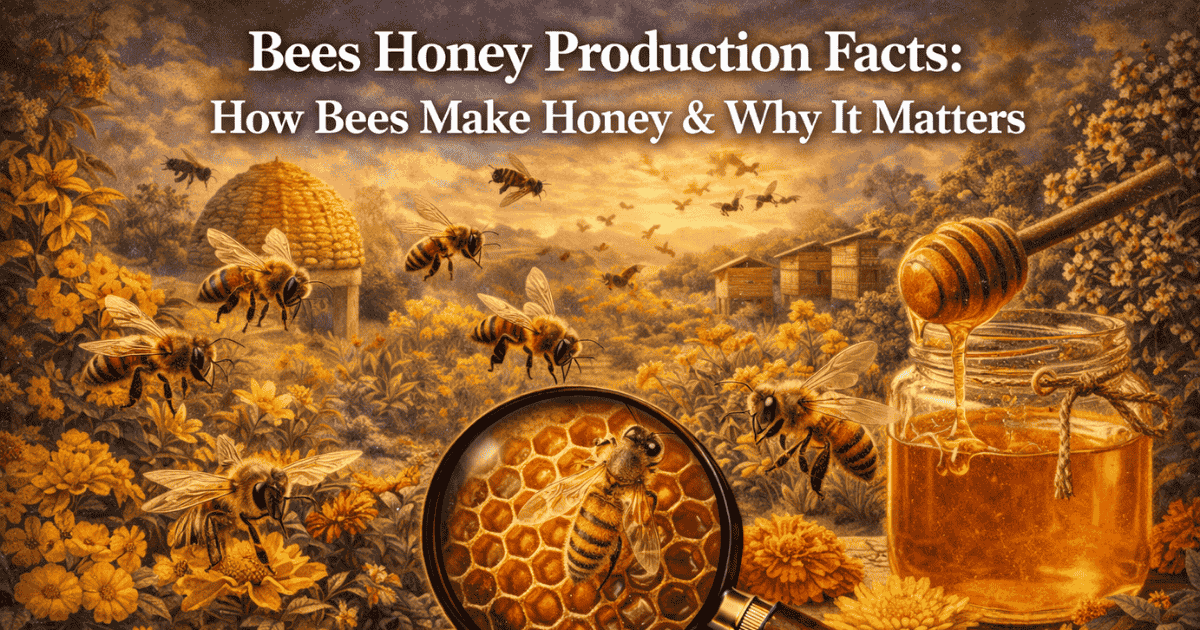
Bees are among the most important insects on Earth, playing a critical role in ecosystems, agriculture, and biodiversity. Bees honey production facts reveal that honey is not merely a sweet food but a survival resource carefully produced through complex biological and social processes. Understanding how bees produce honey helps explain why these insects are essential for both the natural environment and human food systems.
At the core of this process lies the intricate organization of a bee colony. Bees operate as a highly coordinated unit where each member has a defined responsibility. This collective effort reflects patterns seen across animals and wildlife, where survival depends on cooperation, specialization, and environmental adaptation. Honey production is a prime example of how nature achieves efficiency through structure.
Honeybees do not create honey for humans; they produce it to sustain the colony during seasons when flowers are unavailable. This distinction is important when exploring honey production process and how bees make honey, as it emphasizes survival rather than excess. Every drop of honey represents thousands of flower visits and hours of labor.
Why Honey Production Is Essential for Bee Survival
Honey serves as the primary energy source for bees, especially during winter and periods of food scarcity. Unlike nectar, which spoils quickly, honey is a long-lasting, nutrient-dense food that supports the colony year-round. This preservation capability is one of the most fascinating bees honey production facts studied in entomology.
Worker bees collect nectar from flowering plants and begin the transformation process immediately. Inside the bee’s honey stomach, enzymes break down complex sugars into simpler forms. This enzymatic conversion is a key step in the nectar transformation process, allowing honey to resist fermentation and bacterial growth.
Once nectar is stored in honeycomb cells, bees use wing movement to evaporate excess moisture. Reducing water content is critical, as high moisture levels would cause the honey to spoil. This drying process demonstrates the biological intelligence behind honey bee colony behavior, where even airflow is carefully regulated.
Without sufficient honey reserves, colonies face starvation and collapse. This is why honey production is directly linked to colony health, reproduction, and long-term survival. The loss of honey-producing bees therefore has consequences far beyond honey itself, affecting ecosystems and food chains globally.
The Connection Between Honey Production and Pollination
Honey production is inseparable from pollination. While collecting nectar, bees transfer pollen between flowering plants, enabling fertilization and plant reproduction. These bee pollination facts highlight why bees are often described as keystone species in ecosystems.
Pollination supports the growth of fruits, vegetables, nuts, and seeds that humans and animals depend on. The role of bees in ecosystems extends to maintaining plant diversity, stabilizing soil, and supporting other wildlife. Without pollination, many plant species would decline rapidly, disrupting ecological balance.
From an agricultural perspective, honey production indirectly supports global food security. Crops that rely on bee pollination contribute significantly to human nutrition and economies. This makes honey production importance for crops a subject of increasing concern among scientists and conservationists.
When bee populations decline, pollination rates fall, leading to reduced crop yields and higher food prices. These cascading effects demonstrate that protecting bees is not only an environmental responsibility but also an economic necessity.
Beyond honey production, bees are essential for pollination and ecosystem stability, a role widely documented by National Geographic through environmental research on bee populations.
Worker Bees and the Science of Honey Making
Worker bees are the backbone of honey production. They perform nearly all tasks within the colony, from foraging and nectar collection to hive maintenance and defense. Understanding worker bee functions provides insight into how honey production remains efficient and sustainable.
Each worker bee may visit thousands of flowers in its lifetime, collecting nectar in small quantities. This repeated effort highlights the scale of labor required for even a small amount of honey. In fact, producing one pound of honey can require millions of flower visits.
The coordination between worker bees reflects advanced communication systems, including pheromones and movement cues. These systems allow colonies to respond quickly to environmental changes, reinforcing the idea that honey production is a finely tuned survival strategy rather than a simple byproduct.
Why Learning Bees Honey Production Facts Matters
Understanding bees honey production facts deepens appreciation for the complexity of nature and the fragility of ecosystems. Honey production connects animal behavior, environmental balance, pollination, and food security into a single biological process.
As bee populations face threats from habitat loss, pesticides, and climate change, learning how honey is produced helps explain why conservation efforts are urgently needed. Protecting bees means protecting the systems that support life on Earth.
This foundational knowledge sets the stage for exploring deeper aspects of bee behavior, environmental threats, and conservation strategies in the next sections.
How Bees Collect Nectar and Begin Honey Production
The honey production journey begins far beyond the hive, in flowering plants that produce nectar as an energy-rich reward. Foraging bees locate these flowers using scent, color patterns, and environmental memory. These behaviors are a result of evolutionary refinement and represent key bees honey production facts studied in animal ecology.
When a worker bee collects nectar, it stores it in a specialized organ known as the honey stomach. This is not digestion but transportation. During this stage, enzymes such as invertase begin breaking down complex sugars into simpler forms. This early chemical transformation is essential to the honey production process, preventing spoilage and preparing the nectar for long-term storage.
The act of foraging also contributes to bee pollination facts, as pollen grains attach to the bee’s body and are transferred between plants. This dual role—nectar collection and pollination—demonstrates how honey production is deeply linked to ecosystem health and agricultural stability.
Nectar Transformation Inside the Hive
Once the foraging bee returns to the hive, nectar transfer begins. The nectar is passed mouth-to-mouth between worker bees in a process called trophallaxis. Each transfer introduces additional enzymes, further breaking down sugars and altering the nectar’s composition.
This collaborative processing reflects patterns seen throughout animals and wildlife, where collective behavior improves survival efficiency. Honey production is not the effort of a single bee but the outcome of coordinated labor across the colony.
During this phase, water content remains high, meaning the substance is still vulnerable to fermentation. Bees solve this problem through ventilation. By fanning their wings, they create airflow that gradually evaporates moisture from the nectar. Reducing water content to below 18% is critical for producing stable honey.
These steps highlight advanced honey bee colony behavior, where temperature, airflow, and humidity are carefully regulated without external control systems.
Honeycomb Structure and Storage Efficiency
Honeycomb cells are architectural marvels designed for maximum efficiency. The hexagonal shape allows bees to store the greatest amount of honey using the least wax. Wax itself is energy-intensive to produce, making efficiency essential for colony survival.
Once nectar becomes honey, bees seal the cells with a thin wax cap. This sealing protects honey from moisture and contamination, ensuring it remains edible for months or even years. This ability to preserve food naturally is one of the most remarkable bees honey production facts and a key reason honey has been valued by humans for centuries.
Honeycomb storage also plays a role in colony organization. Cells are strategically placed near brood areas to provide immediate access to energy during larval development and colder conditions.
The Role of Worker Bees in Honey Production
Worker bees are the driving force behind honey production. Their responsibilities include nectar collection, enzymatic processing, ventilation, storage, and hive maintenance. Understanding worker bee functions reveals how division of labor improves productivity and survival.
Worker bees transition through different roles as they age. Younger workers typically process nectar and care for larvae, while older workers forage outside the hive. This age-based role allocation optimizes energy use and reduces risk to the colony.
Communication between workers occurs through pheromones and movement signals, allowing rapid responses to changes in nectar availability or environmental threats. This communication ensures that honey production adapts dynamically rather than remaining fixed.
Why Honey Production Reflects Environmental Health
Honey production is not isolated from environmental conditions. Changes in climate, plant diversity, and habitat quality directly affect nectar availability. Declines in flowering plants reduce honey yields and weaken colonies.
This sensitivity makes bees valuable indicators of environmental change. When honey production decreases, it often signals broader ecological stress. The role of bees in ecosystems therefore extends beyond pollination, acting as an early warning system for environmental imbalance.
Healthy honey production supports biodiversity, strengthens food systems, and stabilizes natural cycles. These connections explain why protecting bees is central to conservation efforts worldwide.
Why Understanding Honey Production Matters
Learning about bees honey production facts provides insight into how nature solves complex problems through cooperation and adaptation. Honey production integrates animal behavior, pollination, food preservation, and ecosystem balance into a single biological system.
By understanding this process, readers gain a deeper appreciation for why bees matter—not only as honey producers but as vital contributors to life on Earth. This knowledge lays the groundwork for exploring threats to bees, conservation strategies, and human responsibility in the next section.
Understanding the Structure of a Honeybee Colony
Honey production depends on a highly organized social system where each bee performs a specialized role. A honeybee colony typically consists of three main types: the queen bee, worker bees, and drones. Together, they form a biological system optimized for survival, efficiency, and long-term stability—one of the most fascinating bees honey production facts observed in nature.
This division of labor mirrors patterns found across animals and wildlife, where specialization increases survival chances. In honeybee colonies, no single bee can produce honey alone; success relies entirely on coordination and cooperation.
The Queen Bee’s Role in Colony Sustainability
The queen bee is the reproductive center of the colony. Her primary responsibility is laying eggs, ensuring the continuous renewal of the bee population. Although the queen does not directly participate in honey production, her role is essential to sustaining the workforce that makes honey production possible.
A healthy queen can lay thousands of eggs per day during peak seasons. This reproductive efficiency supports a strong population of worker bees, which directly influences the colony’s ability to collect nectar and store honey. Weak or aging queens often result in declining honey yields, demonstrating the indirect but vital connection between reproduction and the honey production process.
Worker Bees—The Engine Behind Honey Production
Worker bees are the true producers of honey. Female bees that do not reproduce, workers handle nearly every task required to maintain the hive and create honey. Their responsibilities evolve throughout their lifespan, making worker bee functions one of the most dynamic systems in insect societies.
Early-Life Tasks Inside the Hive
Young worker bees begin their lives performing internal hive duties. These include cleaning cells, feeding larvae, and processing nectar brought in by foragers. During this stage, workers play a major role in enzymatic conversion and moisture reduction, both critical steps in transforming nectar into honey.
This internal labor phase highlights the importance of teamwork in honey bee colony behavior, where efficiency depends on timing, communication, and environmental awareness.
Foraging and Nectar Collection
As worker bees age, they transition into foragers. These bees leave the hive to locate nectar-rich flowers, often traveling several kilometers per trip. Foraging exposes bees to predators and environmental hazards, making it one of the riskiest roles in the colony.
Despite these risks, foraging is essential for sustaining honey production and supporting bee pollination facts, as bees transfer pollen between plants during nectar collection. This dual function reinforces the ecological importance of honeybees beyond the hive.
The Role of Drones in the Colony
Drones are male bees whose primary function is reproduction. Their role is limited to mating with queens from other colonies, contributing to genetic diversity. Drones do not collect nectar, produce wax, or participate in honey production.
Although drones do not directly contribute to honey storage, their presence supports long-term colony health by strengthening genetic resilience. Colonies typically reduce drone populations during food shortages, prioritizing energy efficiency and survival.
How Bee Roles Support Environmental Balance
Each type of bee contributes to a balanced system that extends beyond honey production. Worker bees enable pollination, queens ensure population continuity, and drones promote genetic strength. Together, these roles support plant reproduction, biodiversity, and ecosystem stability.
The role of bees in ecosystems is inseparable from their internal organization. When bee populations decline, both honey production and pollination services suffer, leading to broader ecological consequences.
Understanding this structure clarifies why honeybees are considered keystone species. Their survival directly influences food chains, crop yields, and natural habitats worldwide.
Why Bee Diversity Matters in Honey Production
Different bee species and subspecies exhibit variations in foraging behavior, climate tolerance, and honey storage capacity. These differences affect how efficiently honey is produced under specific environmental conditions.
Maintaining genetic and species diversity among bees improves resilience against disease, climate change, and habitat loss. This diversity strengthens honey production systems and reinforces long-term sustainability.
Why These Roles Matter for Humans and Nature
Learning how different bees contribute to honey production deepens appreciation for natural systems built on cooperation. The structured labor of bees illustrates how animal behavior, environmental adaptation, and resource management intersect in nature.
These bees honey production facts provide more than biological insight—they highlight the fragile balance between species and their environments. Protecting bees means protecting the processes that sustain food systems, biodiversity, and ecological harmony.
How Climate and Seasons Shape Honey Production
Honey production is deeply influenced by environmental conditions. Temperature, rainfall, and seasonal cycles determine when plants flower and how much nectar they produce. These factors directly affect bees honey production facts, as even slight changes in climate can alter nectar availability and foraging behavior.
During warm seasons with abundant flowering plants, bees can collect large quantities of nectar and store surplus honey. In contrast, prolonged droughts, excessive rainfall, or unseasonal temperature shifts reduce nectar flow. This variability demonstrates how tightly honey production is linked to natural cycles found across animals and wildlife, where timing and adaptation are critical for survival.
Seasonal awareness within the hive allows bees to adjust their behavior. Colonies increase foraging during peak bloom periods and conserve resources when nectar becomes scarce. This adaptive response is a core element of honey bee colony behavior and highlights the intelligence behind collective decision-making.
The Importance of Plant Diversity for Nectar Supply
The variety of flowering plants in an environment plays a major role in honey production. Diverse plant species provide continuous nectar sources throughout the year, supporting steady honey accumulation. Monoculture landscapes, on the other hand, limit nectar availability to short periods.
Plant diversity supports bee pollination facts by ensuring bees can forage across seasons without long gaps in food supply. This diversity also influences honey flavor, color, and nutritional composition, making honey a direct reflection of local ecosystems.
Habitats rich in wildflowers, trees, and native plants contribute to healthier colonies and stronger honey yields. These ecosystems demonstrate the role of bees in ecosystems, where plant and insect survival are interconnected.
Habitat Quality and Its Impact on Bee Health
Healthy habitats provide bees with access to clean water, nesting areas, and diverse food sources. When habitats are degraded through urban expansion, intensive agriculture, or deforestation, honey production declines sharply.
Loss of natural habitats disrupts foraging routes and increases stress within colonies. Chronic stress weakens immune systems, reduces lifespan, and lowers productivity. These pressures affect worker bee functions, making it harder for colonies to maintain stable honey reserves.
Protecting habitats ensures bees can perform their roles effectively. This principle reinforces the importance of conservation efforts that focus on preserving environments rather than reacting after population decline.
Pesticides and Chemical Exposure
Chemical exposure is one of the most significant threats to honey production. Pesticides used in agriculture can contaminate nectar and pollen, affecting bees even at low doses. These chemicals interfere with navigation, learning, and communication.
Sublethal exposure does not always kill bees immediately, but it reduces foraging efficiency and disrupts honey production process stages. Bees exposed to chemicals may fail to return to the hive, leading to reduced nectar intake and weakened colonies.
Understanding these risks is essential when discussing bees honey production facts, as honey output often reflects environmental toxicity levels. Declines in honey yield can serve as early indicators of chemical imbalance in ecosystems.
Climate Change and Long-Term Challenges
Climate change introduces long-term uncertainty into honey production systems. Shifts in temperature patterns affect flowering times, causing mismatches between bee activity and nectar availability. These timing disruptions reduce foraging success and colony growth.
Extreme weather events such as heatwaves, floods, and storms further strain bee populations. Colonies must expend more energy on survival, leaving fewer resources for honey storage. This stress highlights the vulnerability of honey production to global environmental change.
Adapting to these challenges requires resilient ecosystems that allow bees to adjust naturally. Protecting diverse habitats strengthens the ability of bees to cope with environmental variability.
Why Environmental Awareness Matters
Understanding how environmental factors influence honey production deepens appreciation for natural balance. Honey is not just a product of bees—it is a reflection of ecosystem health, climate stability, and biodiversity.
Learning these bees honey production facts emphasizes the need to protect pollinators and their environments. When conditions support healthy bees, honey production thrives, pollination increases, and ecosystems remain stable.
This awareness prepares readers to explore conservation strategies, human responsibility, and sustainable practices that protect bees and the systems they support in the final section.
Why Bees Are Critical for Long-Term Environmental Stability
Bees are not only honey producers; they are essential architects of ecological balance. Their daily activities support plant reproduction, food chains, and biodiversity. Understanding bees honey production facts reveals how deeply interconnected bees are with the health of natural systems and why their protection is vital for the future.
Honey production reflects environmental conditions in real time. Healthy ecosystems support strong nectar flow, active foraging, and stable colonies. When ecosystems weaken, honey production declines, signaling broader environmental stress. This relationship mirrors patterns seen throughout animals and wildlife, where population health often reflects habitat quality.
Bees function as both contributors and indicators of ecosystem stability. Their presence supports plant diversity, which in turn sustains insects, birds, and mammals. Protecting bees therefore strengthens entire ecological networks rather than isolated species.
Human Activities and Their Impact on Honey Production
Human influence has become one of the most significant factors shaping honey production. Land-use changes, agricultural practices, and urban development affect the availability of flowering plants and safe habitats for bees.
Monoculture farming reduces floral diversity, limiting nectar sources and shortening foraging seasons. This restriction weakens colonies and reduces honey yields. In contrast, landscapes rich in native plants provide continuous nectar flow, supporting stronger colonies and more consistent honey production.
Chemical use also affects honey bee colony behavior by interfering with navigation, learning, and communication. Bees exposed to harmful substances often struggle to forage efficiently, leading to reduced nectar intake and lower honey storage. These challenges highlight how human decisions directly influence honey production outcomes.
Conservation Strategies That Support Honey Production
Effective conservation focuses on creating environments where bees can thrive naturally. Protecting habitats, restoring native vegetation, and reducing chemical exposure are among the most impactful strategies for sustaining honey production.
Planting diverse flowering species throughout the year ensures bees have access to nectar across seasons. Habitat restoration efforts that prioritize wildflowers, shrubs, and trees support bee pollination facts and strengthen ecosystem resilience.
Reducing stressors allows colonies to allocate energy toward essential tasks such as nectar processing and storage. This improves the honey production process and increases colony survival during challenging seasons.
The Role of Individuals and Communities
Protecting bees is not solely the responsibility of governments or scientists. Individual actions collectively shape environmental outcomes. Simple choices—such as supporting pollinator-friendly practices, preserving green spaces, and reducing pesticide use—can significantly improve conditions for bees.
Communities that prioritize ecological balance often experience healthier ecosystems and improved agricultural productivity. These benefits reinforce the role of bees in ecosystems, demonstrating how small-scale actions produce large-scale impact.
Education also plays a key role. Learning and sharing bees honey production facts fosters appreciation for bees and encourages responsible behavior that supports long-term sustainability.
Honey Production as a Symbol of Natural Balance
Honey production is one of nature’s most elegant examples of efficiency, cooperation, and adaptation. It integrates animal behavior, resource management, and environmental harmony into a single process refined over millions of years.
Each jar of honey represents thousands of flower visits, complex chemical transformations, and precise coordination within the hive. This process illustrates how natural systems achieve balance without waste, offering valuable lessons for sustainable living.
When bees thrive, ecosystems flourish. When ecosystems flourish, honey production remains stable. This balance underscores why protecting bees is essential for environmental resilience and food security.
Final Thoughts on Bees and Honey Production
Understanding bees honey production facts provides more than scientific knowledge—it reveals the delicate connections that sustain life on Earth. Honey production is a reminder that nature operates through cooperation, diversity, and balance.
By protecting bees, supporting healthy habitats, and making informed choices, humans can help preserve the systems that allow honey production and pollination to continue. These efforts ensure a future where ecosystems remain resilient, food systems remain stable, and biodiversity continues to thrive.
Frequently Asked Questions
How do bees produce honey?
Bees produce honey by collecting nectar from flowers and storing it in their honey stomachs. Inside the hive, the nectar is passed between worker bees, where enzymes break down sugars. Bees then evaporate excess water by fanning their wings, turning nectar into thick, long-lasting honey.
Why do bees make honey instead of eating nectar directly?
Bees make honey because nectar spoils quickly, while honey can be stored for long periods. Honey provides a stable food source that helps the colony survive winter and times when flowers are scarce.
What role do worker bees play in honey production?
Worker bees are responsible for nearly every step of honey production. They collect nectar, process it with enzymes, reduce moisture, store it in honeycomb cells, and protect the hive. Without worker bees, honey production would not be possible.
How long does it take bees to make honey?
The process of making honey can take several days to weeks. It depends on nectar availability, weather conditions, and colony strength. Bees must collect large amounts of nectar and reduce its moisture before it becomes fully ripened honey.
Why is honey important for the bee colony?
Honey is the primary energy source for bees. It fuels daily activity, supports larval development, and allows the colony to survive during cold seasons or food shortages.
How does honey production help the environment?
Honey production is closely connected to pollination. While collecting nectar, bees pollinate plants, supporting plant reproduction, biodiversity, and food production. This makes bees essential to healthy ecosystems.
What happens if bees stop producing honey?
If bees stop producing honey, colonies may starve during periods without flowers. Over time, this can lead to colony collapse, reduced pollination, and negative effects on ecosystems and agriculture.
Are all bees capable of producing honey?
No, only certain species, such as honeybees, produce honey in large quantities. Many other bee species pollinate plants but do not store honey or produce it in significant amounts.
Why is protecting bees important for the future?
Protecting bees is crucial because they support pollination, biodiversity, and food security. Declining bee populations threaten ecosystems, crop production, and the natural balance that honey production depends on.