
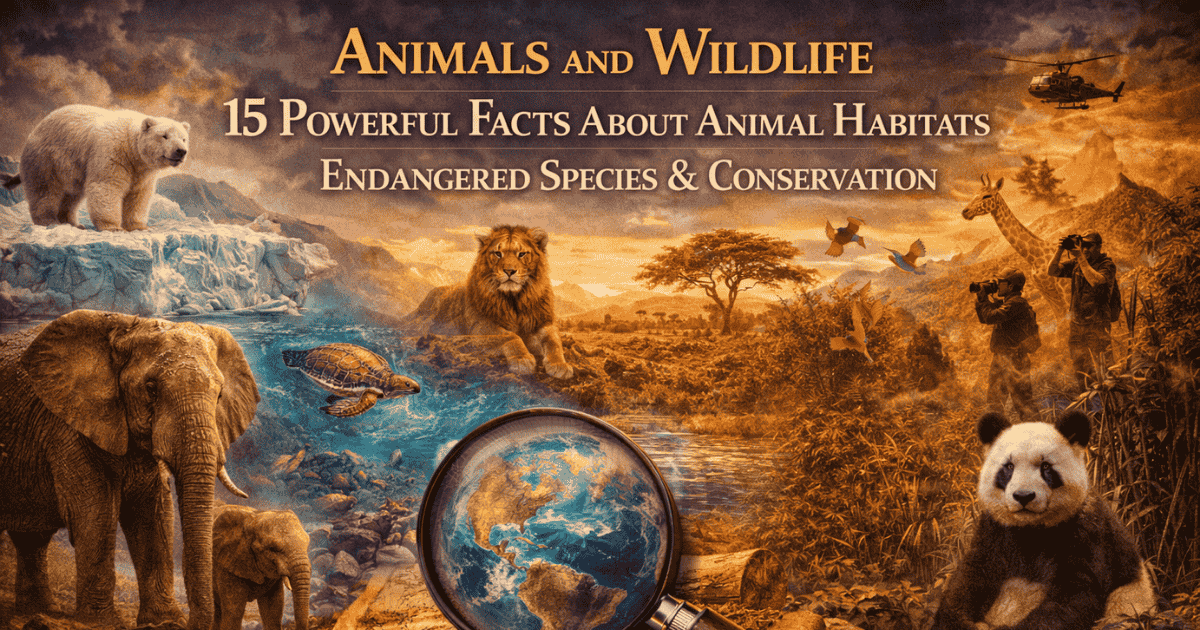
Animals and wildlife are not isolated curiosities; they are integral components of living systems that regulate climate, sustain food chains, and maintain ecological balance. Every species—whether visible or hidden—participates in networks shaped by evolution, geography, and environmental conditions. These networks determine how energy flows through ecosystems and how life persists across generations.
At the heart of these systems lie animal habitats—the forests, oceans, grasslands, wetlands, and deserts that provide food, shelter, and breeding space. Habitats are not interchangeable. Each supports species adapted to very specific conditions. When a habitat changes faster than species can adapt, populations decline, often irreversibly. This reality underpins modern wildlife conservation, which prioritizes protecting environments rather than reacting after losses occur.
Why Habitats Matter More Than Individual Species
Conservation history shows that saving a single species without securing its habitat rarely works. Predators depend on prey availability, prey depend on vegetation, and vegetation depends on soil, water, and climate. Disrupt one layer, and the entire structure weakens. This is why habitat fragmentation—through roads, cities, and agriculture—remains a leading driver of endangered species worldwide.
Scientific wildlife research consistently demonstrates that large, connected habitats support healthier populations with greater genetic diversity. Connectivity allows animals to move, adapt, and recover from environmental stress. Without it, isolated populations become vulnerable to disease, inbreeding, and sudden environmental shifts.
Movement, Connection, and Ecological Balance
Movement is a defining feature of wildlife systems. Seasonal shifts in temperature and food availability force many species to travel long distances. These animal migration patterns connect continents and oceans into shared ecological circuits. When migration corridors are disrupted, animals are pushed into smaller areas where competition increases and survival rates fall.
Marine systems reveal a similar interconnectedness, often hidden from view. The stability of oceans depends on the health of deep sea ecosystems, which influence oxygen production, carbon storage, and nutrient cycling. Damage in these depths—through pollution or industrial activity—can alter surface ecosystems and global climate patterns.
Small Species, Large Impact
Not all influential species are large or visible. Insects, microorganisms, and fungi form the foundation of most ecosystems. Among them, pollinators play a critical role in both wild and agricultural systems. The bee pollination process supports plant reproduction, biodiversity, and a significant portion of global food production. Declines in pollinator populations signal deeper systemic problems rather than isolated species loss.
These overlooked contributors illustrate a key principle of ecology: impact is not measured by size. When foundational species decline, the effects cascade upward through food chains, destabilizing entire ecosystems.
Human Influence and the Conservation Imperative
Human activity now shapes nearly every ecosystem on Earth. Land conversion, pollution, resource extraction, and climate change alter habitats faster than many species can adapt. This pressure has transformed conservation from a niche concern into a global necessity.
Modern conservation efforts focus on prevention—maintaining ecosystem function before collapse occurs. Protected areas such as nature reserves and marine sanctuaries give ecosystems space to operate with minimal disturbance, allowing natural processes to continue. However, protected areas alone are insufficient without broader cooperation and sustainable land-use planning.
International collaboration plays a crucial role in setting standards and priorities. Organizations like the World Wide Fund for Nature support habitat protection and community-based conservation across regions, while assessments from the International Union for Conservation of Nature help identify species at risk and guide evidence-based policy. Their work emphasizes that conservation decisions must be grounded in data, not short-term interests.
Ethics, Intelligence, and Responsibility
As understanding of animal behavior deepens, conservation increasingly incorporates animal welfare considerations. Research into animal intelligence traits—including problem-solving, memory, and social bonding—challenges outdated views that treated wildlife as expendable. Ethical conservation recognizes that minimizing unnecessary suffering is part of responsible environmental stewardship.
Protecting wildlife is ultimately inseparable from protecting human well-being. Healthy ecosystems provide clean air, stable climates, fertile soil, and resilient food systems. When ecosystems fail, the consequences extend beyond biodiversity loss to economic instability and public health risks.
How Wildlife Systems Function Across Land and Sea
Wildlife systems operate as layered networks where energy, nutrients, and information move continuously between species and environments. Animals and wildlife are shaped by these flows, adapting behaviors and physiology to survive within changing conditions. Understanding how these systems function requires looking beyond individual species to the interactions that sustain ecosystems over time.
At every scale—local, regional, and global—animal habitats determine which species can exist, how they interact, and how resilient they are to disruption. Habitats define access to food, water, shelter, and breeding space, but they also regulate temperature, humidity, and seasonal rhythms that guide animal behavior.
Energy Flow and Food Webs
All ecosystems are structured around energy transfer. Plants capture sunlight and convert it into usable energy; herbivores consume plants; predators consume herbivores; decomposers recycle nutrients back into the system. This layered structure—often called a food web—ensures balance by limiting unchecked population growth.
When a single link weakens, the effects cascade. The loss of top predators can trigger overgrazing, while the decline of decomposers disrupts soil fertility. These imbalances are a common pathway toward endangered species, as weakened ecosystems fail to support viable populations.
Movement as a Survival Strategy
Movement is central to how wildlife systems remain connected. Seasonal shifts in temperature and food availability drive animal migration patterns that link distant regions into a single ecological circuit. These movements distribute nutrients, control population density, and synchronize breeding cycles across landscapes.
Migration Corridors and Connectivity
Migration depends on uninterrupted corridors—routes that allow animals to travel safely between habitats. When roads, cities, or intensive agriculture block these paths, animals are forced into smaller areas, increasing competition and mortality. Maintaining connectivity is therefore a priority within modern wildlife conservation planning.
Ocean Systems and Hidden Interactions
Marine environments operate on similar principles, though many processes occur out of sight. Oceans regulate global climate by absorbing heat and carbon dioxide, while currents transport nutrients across vast distances. The stability of deep sea ecosystems plays a critical role in this regulation, supporting organisms that influence oxygen production and long-term carbon storage.
Damage to these systems—through pollution, overfishing, or industrial extraction—can alter ocean chemistry and disrupt surface ecosystems. Because recovery in deep marine environments is extremely slow, prevention is far more effective than remediation.
Keystone Species and Ecological Stability
Not all species contribute equally to ecosystem stability. Some—known as keystone species—exert a disproportionately large influence on their environments. Their presence shapes habitat structure, species diversity, and resource availability.
Pollinators as System Stabilizers
Pollinators are among the most important keystone species. The bee pollination process supports wild plant reproduction and agricultural productivity, linking natural ecosystems directly to human food systems. Declines in pollinator populations often precede broader ecological collapse, making them early indicators of environmental stress.
Predators and Population Control
Predators regulate prey populations, preventing overgrazing and habitat degradation. Their absence can destabilize entire ecosystems, illustrating why conservation strategies increasingly focus on protecting functional roles rather than individual species alone.
Science, Data, and Evidence-Based Conservation
Advances in wildlife research have transformed how ecosystems are studied and protected. Satellite tracking, genetic analysis, and long-term field studies allow scientists to monitor population trends, map movement patterns, and identify critical habitats with unprecedented accuracy.
From Data to Policy
Scientific evidence guides conservation decisions at every level. Habitat mapping informs land-use planning, while population assessments help prioritize protection efforts. Global frameworks rely on rigorous analysis to determine which ecosystems face the greatest risk and which interventions are most effective.
International collaboration strengthens this process. Conservation programs supported by the World Wide Fund for Nature integrate science with community engagement, while assessments coordinated by the International Union for Conservation of Nature provide standardized criteria for evaluating extinction risk. Educational institutions and media organizations such as National Geographic further disseminate research, increasing public understanding of ecosystem dynamics.
Ethics, Adaptation, and Human Responsibility
As ecosystems change, animals are forced to adapt at unprecedented rates. Species with flexible behaviors and broad habitat tolerance fare better than specialists dependent on narrow conditions. This disparity underscores the ethical dimension of conservation: human actions largely determine which species survive.
Welfare Within Wild Systems
Modern conservation increasingly integrates animal welfare considerations, recognizing that stress, injury, and habitat degradation affect survival and reproduction. Respecting animal intelligence traits—including learning, memory, and social complexity—supports management approaches that reduce unnecessary suffering while maintaining ecological function.
Building Resilience for the Future
Resilient ecosystems share common traits: diversity, connectivity, and functional redundancy. Protecting large, connected animal habitats, maintaining migration corridors, and safeguarding keystone species are central to strengthening resilience. These priorities guide contemporary conservation efforts, shifting focus from short-term fixes to long-term stability.
Types of Animals and Their Roles in Natural Systems
The diversity of animals and wildlife is the result of millions of years of evolution shaped by environment, competition, and survival pressure. Animals are not randomly distributed across the planet; they are organized into biological groups that occupy specific ecological roles. Understanding these groups helps explain how ecosystems remain stable—or why they collapse when key roles disappear.
Each group contributes differently to ecosystem function, influencing food chains, nutrient cycles, and habitat structure within their respective animal habitats.
Mammals and Complex Social Structures
Mammals are among the most adaptable animals in the wild, occupying environments ranging from dense forests to open oceans. What sets mammals apart is not just physiology but behavior. Many mammals form complex social systems involving cooperation, communication, and long-term learning.
These social structures increase survival by improving hunting efficiency, predator detection, and offspring care. The presence of advanced animal intelligence traits—such as memory, problem-solving, and emotional bonding—has been documented across many mammalian species. These traits influence how mammals respond to environmental change and human pressure, making them a central focus of wildlife research.
From an ecological perspective, mammals often act as population regulators. Large herbivores shape vegetation patterns, while predators control prey numbers. Removing mammals from ecosystems frequently results in overgrazing, habitat degradation, and biodiversity loss.
Birds and Ecological Connectivity
Birds play a crucial role in linking ecosystems across vast distances. Through seed dispersal, pollination, and predation, they influence plant distribution and insect populations. Their ability to fly allows them to exploit resources unavailable to land-bound species, increasing ecosystem resilience.
Seasonal Movement and Adaptation
Many bird species rely on animal migration patterns to survive seasonal shifts in temperature and food availability. These movements transport nutrients across regions and synchronize ecological processes between distant habitats. When migration routes are disrupted, the impact is felt across entire food webs.
Bird populations are also sensitive indicators of environmental health. Changes in bird behavior or numbers often signal deeper problems within ecosystems, such as pollution or climate instability.
Reptiles and Amphibians as Environmental Indicators
Reptiles and amphibians occupy a unique ecological position. Their physiology makes them highly sensitive to temperature, moisture, and chemical changes in the environment. Because of this sensitivity, declines in these species often indicate habitat degradation long before more visible species are affected.
Amphibians, in particular, play dual roles in aquatic and terrestrial systems, connecting water and land ecosystems. Their decline is closely associated with habitat loss, pollution, and climate change—factors strongly linked to rising endangered species numbers globally.
Marine Life and Planetary Balance
Marine animals represent one of the largest and least understood components of wildlife. Oceans cover most of the planet and regulate climate, yet many marine systems operate beyond direct human observation.
Surface and Deep Ocean Interactions
Fish, marine mammals, and invertebrates form interconnected food webs that influence oxygen production and carbon cycling. Beneath the surface, deep sea ecosystems support organisms that regulate nutrient flow and long-term carbon storage. Disruption at depth can destabilize surface ecosystems, illustrating how tightly coupled marine systems are.
Marine biodiversity loss has consequences far beyond ocean boundaries, affecting climate regulation, coastal stability, and global food supplies.
Insects and the Foundation of Ecosystems
Insects are often underestimated, yet they form the backbone of terrestrial ecosystems. They pollinate plants, decompose organic matter, and serve as a primary food source for countless species.
Pollinators and Food Security
Among insects, pollinators are especially critical. The bee pollination process supports plant reproduction, crop yields, and ecosystem diversity. When pollinator populations decline, plant communities weaken, leading to cascading effects throughout food chains. This is why insect loss is increasingly viewed as a systemic ecological crisis rather than a niche conservation issue.
Why Functional Roles Matter More Than Species Counts
Conservation efforts often focus on species numbers, but ecosystem health depends more on functional roles than raw diversity alone. Losing a species that performs a unique role—such as a top predator or keystone pollinator—can destabilize entire systems.
Modern wildlife conservation strategies prioritize maintaining these roles by protecting habitats, preserving connectivity, and supporting natural population dynamics. Protected areas such as nature reserves help safeguard functional diversity by allowing ecosystems to operate without constant human disturbance.
International conservation frameworks emphasize this role-based approach. Organizations such as the World Wide Fund for Nature advocate ecosystem-level protection, while scientific assessments coordinated by the International Union for Conservation of Nature evaluate extinction risk in the context of ecological function, not just population size.
Implications for Conservation and Human Survival
Understanding animal groups and their roles reshapes how conservation is approached. Protecting wildlife is not about saving isolated species—it is about preserving systems that support climate stability, food production, and ecological resilience.
When ecosystems lose functional balance, recovery becomes slow and uncertain. Protecting diverse animal roles within intact animal habitats remains one of the most effective strategies for ensuring long-term environmental stability and human well-being.
Animal Habitats and the Architecture of Biodiversity
Animal habitats are the physical and biological settings that determine how wildlife lives, feeds, reproduces, and adapts. Habitats are not static backdrops; they are dynamic systems shaped by climate, geography, vegetation, water availability, and species interactions. The structure and quality of a habitat largely decide whether populations thrive or decline.
From an ecological perspective, habitats act as filters. They permit certain traits to succeed while excluding others. When conditions shift—through climate change or human modification—the filter changes, often faster than species can adapt. This mismatch is a central driver of biodiversity loss and a primary concern for wildlife conservation.
Forests and Rainforests as Complexity Engines
Forests and rainforests host some of the highest biodiversity on Earth. Their layered structure—canopy, understory, forest floor—creates microhabitats that support specialized species. This vertical complexity allows many organisms to coexist by reducing direct competition for resources.
Fragmentation and Edge Effects
When forests are fragmented by roads or agriculture, edge environments expand while core habitat shrinks. These edges alter temperature, humidity, and predator access, increasing stress on interior species. Fragmentation accelerates the path toward endangered species, particularly for animals that require large, continuous territories.
Sustaining forest integrity requires large protected tracts and connectivity between them. Conservation planning increasingly prioritizes corridors that allow wildlife to move safely between forest patches, preserving genetic diversity and resilience.
Grasslands and Savannas—Balance Through Movement
Grasslands and savannas are defined by open spaces, seasonal rainfall, and the movement of large herbivores. Grazing patterns shape plant communities, which in turn influence predator distribution. These systems depend on mobility and scale; restricting movement destabilizes the entire network.
Grazers, Predators, and Feedback Loops
Herbivores maintain grassland health by preventing woody plant overgrowth, while predators regulate herbivore numbers. Disrupting either role leads to cascading effects, including soil erosion and habitat degradation. Maintaining these feedback loops is a core objective of ecosystem-level conservation efforts.
Deserts and Extreme Environments
Deserts appear sparse, yet they host species finely adapted to heat, water scarcity, and temperature extremes. Survival here depends on behavioral strategies—nocturnal activity, burrowing, seasonal dormancy—rather than abundance.
Adaptation Over Abundance
Species in extreme environments often have narrow tolerance ranges. Small environmental changes can have outsized impacts, making deserts particularly vulnerable to climate shifts. Protecting these habitats emphasizes minimizing disturbance rather than intensive management.
Wetlands and Freshwater Systems
Wetlands, rivers, and lakes function as ecological connectors. They filter pollutants, regulate floods, and provide breeding grounds for fish, amphibians, and birds. Despite their importance, wetlands are among the most altered habitats globally.
Hydrology and Habitat Health
Altered water flow—through dams or drainage—changes nutrient availability and species composition. Because freshwater systems integrate activities across entire watersheds, effective protection requires coordinated land-use planning beyond site boundaries.
Oceans and Marine Habitats
Marine habitats range from sunlit coastal zones to abyssal plains. Together, they regulate global climate, support fisheries, and maintain planetary oxygen balance. The stability of deep sea ecosystems underpins many of these services, even though they are rarely seen.
Surface Impacts, Deep Consequences
Pollution and warming at the surface propagate downward through currents and food webs. Recovery in deep environments is slow, making precautionary protection far more effective than remediation. Marine reserves and reduced extraction zones are therefore essential tools for wildlife preservation.
Human Pressure, Protection, and Recovery
Human expansion compresses habitats into smaller fragments, increasing conflict and reducing resilience. Urban growth, intensive agriculture, and infrastructure development reshape landscapes at unprecedented speed. Without intervention, these pressures erode habitat quality faster than species can adapt.
Protected areas such as nature reserves function as ecological anchors—spaces where natural processes continue with limited interference. Their effectiveness increases when they are large, connected, and supported by surrounding sustainable land uses.
International collaboration strengthens habitat protection. Programs supported by the World Wide Fund for Nature promote landscape-scale planning, while risk assessments from the International Union for Conservation of Nature help prioritize habitats critical for preventing extinction. Broad public understanding, amplified by outlets like National Geographic, further supports evidence-based decisions.
Why Habitat Integrity Determines the Future
Protecting habitats is the most efficient path to safeguarding biodiversity. Intact habitats sustain animal migration patterns, support keystone processes like the bee pollination process, and reduce stress that undermines animal welfare in the wild. When habitats remain functional, ecosystems self-regulate and recover from disturbance.
Habitat integrity is therefore not a secondary concern—it is the foundation of conservation success. Preserving and restoring animal habitats at scale remains the clearest strategy for ensuring long-term ecological stability and human well-being.
Animal Behavior as a Blueprint for Survival
Animal behavior is the visible expression of how species solve survival problems. Feeding, mating, communication, movement, and defense are not random actions; they are refined strategies shaped by environment and evolution. Within intact animal habitats, these behaviors maintain balance by regulating populations, distributing nutrients, and synchronizing life cycles.
Behavior becomes especially important when environments change. Species that can adjust routines, learn new patterns, or exploit alternative resources tend to persist, while specialists often decline—one of the pathways that accelerates endangered species risk.
Foraging, Hunting, and Energy Efficiency
Every animal must balance energy intake against energy expenditure. Predators refine hunting techniques to maximize success while minimizing risk; herbivores evolve grazing strategies that reduce exposure to predators while accessing nutrition.
Behavioral Trade-offs in Feeding
Animals constantly make trade-offs between safety and food. Foraging farther may yield better nutrition but increases predation risk. Group foraging reduces danger but intensifies competition. These trade-offs shape daily routines and seasonal behaviors across ecosystems and are central to wildlife research focused on population stability.
Communication and Social Organization
Communication underpins cooperation and conflict avoidance. Animals use sound, scent, posture, color, and movement to signal danger, establish territory, attract mates, and coordinate group actions. Effective communication increases survival by reducing unnecessary conflict and improving group cohesion.
Social Structures and Collective Advantage
Living in groups provides advantages—shared vigilance, cooperative hunting, and collective defense. However, social living also introduces challenges such as disease transmission and competition. The success of social systems depends on stable environments and predictable resource availability, reinforcing the importance of wildlife conservation at the habitat level.
Movement, Dispersal, and Seasonal Strategy
Movement allows animals to track resources through time and space. Daily movements connect feeding and shelter sites, while long-distance travel links breeding and non-breeding areas. These movements integrate ecosystems into larger networks.
Seasonal Timing and Synchronization
Seasonality governs breeding, migration, and dormancy. When climate patterns shift, timing mismatches can occur—food peaks may no longer align with breeding periods. Disrupted animal migration patterns are a clear example, where altered timing reduces reproductive success and juvenile survival.
Defense, Avoidance, and Risk Reduction
Avoiding danger is as critical as acquiring food. Animals evolve defenses such as camouflage, warning coloration, mimicry, armor, speed, and group vigilance. Behavioral avoidance—choosing safer habitats or times of activity—often reduces direct confrontation altogether.
Stress Responses and Welfare in the Wild
Chronic stress from habitat disturbance, noise, or human presence alters behavior and physiology, reducing immunity and reproduction. Integrating animal welfare considerations into conservation recognizes that minimizing persistent stress improves population resilience without intensive intervention.
Learning, Intelligence, and Adaptability
Behavior is not fixed. Many species learn from experience, adjust strategies, and pass information socially. Learning accelerates adaptation in changing environments and can buffer populations against rapid disturbance.
Cognitive Flexibility and Problem-Solving
Evidence of animal intelligence traits—memory, innovation, and tool use—demonstrates how cognition supports survival. Cognitive flexibility allows animals to exploit new resources, avoid novel threats, and adjust social dynamics when conditions change.
Cultural Transmission in Wildlife
In some species, behaviors spread socially rather than genetically. Learned migration routes, feeding techniques, and vocalizations can persist across generations. Protecting these cultural behaviors requires protecting stable social structures and uninterrupted habitats.
Behavior-Informed Conservation
Understanding behavior transforms conservation from reactive to preventive. When managers anticipate how animals respond to disturbance—altered movement, reduced breeding, increased conflict—they can design interventions that maintain natural routines.
Protected areas such as nature reserves are most effective when they account for behavioral needs: sufficient space for movement, quiet refuges for breeding, and connectivity for dispersal. International conservation programs supported by the World Wide Fund for Nature increasingly incorporate behavioral data into planning, while assessments coordinated by the International Union for Conservation of Nature evaluate risk in light of ecological function and adaptability.
Why Behavior Is Central to Ecosystem Stability
Ecosystems remain stable when behaviors align with environmental rhythms. Feeding maintains plant–herbivore balance; movement connects habitats; communication sustains social order. When behavior is disrupted—by habitat loss, climate change, or chronic disturbance—ecosystems unravel.
Protecting behavior means protecting context: intact animal habitats, functional connectivity, and predictable environmental cues. This approach strengthens conservation efforts by preserving the processes that allow wildlife to self-regulate and recover.
Endangered Species—Causes, Cascades, and Consequences
The rise of endangered species is not a single problem with a single cause; it is the cumulative outcome of multiple pressures acting together. When ecosystems are stressed from different directions—habitat loss, climate disruption, pollution, and exploitation—the margin for survival narrows. Species decline first, then interactions weaken, and finally entire systems destabilize.
This progression explains why modern wildlife conservation emphasizes early intervention. Preventing decline is far more effective than attempting recovery after populations fall below viable thresholds.
Habitat Loss as the Primary Driver
Across terrestrial and marine systems, habitat loss remains the most significant threat to wildlife. Clearing forests, draining wetlands, fragmenting grasslands, and degrading reefs remove the physical foundation species need to survive.
Fragmentation, Isolation, and Genetic Erosion
When animal habitats are broken into smaller patches, populations become isolated. Isolation reduces genetic diversity, increases susceptibility to disease, and limits the ability to adapt to change. Over time, even protected fragments can become ecological traps if connectivity is not restored.
Maintaining corridors that support animal migration patterns and dispersal is therefore essential. Connectivity allows recolonization after disturbance and buffers populations against localized shocks.
Climate Change and Ecological Mismatch
Climate change amplifies existing threats by altering temperature, rainfall, and seasonality. Species adapted to narrow climate ranges face rapid shifts that outpace their ability to adjust.
Timing Failures and Resource Gaps
Many species synchronize breeding with food availability. As seasons shift, these cues fall out of alignment—flowers bloom earlier, insects emerge later, or prey peaks move unpredictably. Such mismatches reduce reproductive success and juvenile survival, accelerating the path toward endangered species status.
Pollution and Cumulative Stress
Pollution acts as a chronic stressor across ecosystems. Plastics, pesticides, heavy metals, and noise degrade habitat quality and alter behavior.
Invisible Impacts on Physiology and Behavior
Sublethal exposure—levels that do not immediately kill—can still impair navigation, communication, and immunity. Persistent stress undermines animal welfare in the wild, lowering resilience even when food and space appear adequate. Addressing pollution therefore strengthens populations without direct manipulation.
Overexploitation and Illegal Trade
Unsustainable hunting, fishing, and wildlife trade remove individuals faster than populations can replace them. This pressure is especially damaging for long-lived species with slow reproductive rates.
Market Demand and Enforcement Gaps
High demand combined with weak enforcement creates incentives that overwhelm local protections. Effective responses integrate law enforcement, community livelihoods, and demand reduction—components increasingly central to coordinated conservation efforts.
From Species Loss to System Failure
Species do not disappear in isolation. Each loss alters interactions—predation, pollination, decomposition—that keep ecosystems functional.
Keystone Roles and Trophic Cascades
The removal of keystone species triggers trophic cascades, where changes at one level ripple through the food web. Pollinator declines weaken plant communities; predator loss leads to overgrazing; decomposer disruption stalls nutrient cycling. Protecting roles is therefore as important as protecting numbers.
Thresholds and Irreversibility
Ecosystems can absorb disturbance up to a point. Beyond certain thresholds, recovery becomes slow or impossible. Recognizing early warning signs—rapid population drops, behavioral changes, reduced recruitment—is a core goal of wildlife research.
Risk Assessment and Prioritization
Given limited resources, conservation must prioritize actions that deliver the greatest benefit.
Evidence-Led Decisions
Risk assessment combines population trends, habitat quality, and exposure to threats. Global evaluations coordinated by the International Union for Conservation of Nature standardize criteria to identify species at highest risk and guide action where it matters most.
Scaling Protection for Impact
Protection is most effective when it operates at the scale of ecological processes. Landscape-level planning, marine networks, and transboundary cooperation address threats that no single reserve can manage alone. Programs supported by the World Wide Fund for Nature increasingly integrate habitat protection with community participation to sustain outcomes.
Prevention as the Most Effective Strategy
Preventing species decline delivers compounding benefits. Intact habitats sustain natural regulation, reduce management costs, and support coexistence with human activity.
Habitat Integrity and Functional Resilience
Protecting large, connected animal habitats preserves movement, breeding, and foraging behaviors that allow wildlife to self-regulate. This integrity supports processes like the bee pollination process, nutrient cycling, and natural population control.
Designing for Recovery
Where degradation has occurred, restoration guided by ecological function—rather than cosmetic fixes—can rebuild resilience. Reconnecting corridors, reducing chronic stressors, and safeguarding keystone roles accelerate recovery and lower extinction risk.
Why Addressing Endangerment Protects Human Futures
Human well-being is inseparable from biodiversity. Food security, climate regulation, disease control, and economic stability depend on healthy ecosystems. When endangered species increase, it signals weakening life-support systems.
Addressing endangerment through prevention, connectivity, and evidence-based management strengthens ecosystems before collapse occurs. In doing so, conservation protects not only wildlife, but the foundations of human prosperity.
Wildlife Conservation in Practice—From Policy to the Ground
Effective wildlife conservation is not a single action; it is a coordinated system that connects science, policy, land management, and community participation. Conservation succeeds when strategies operate at the same scale as ecological processes—across landscapes, seascapes, and political boundaries—while remaining adaptable to local conditions.
Modern conservation has shifted away from isolated interventions toward integrated planning that protects animal habitats, sustains ecological functions, and reduces the pressures that push species toward endangered species status.
Protected Areas as Conservation Anchors
Protected areas remain a cornerstone of conservation. When designed and managed well, they safeguard breeding sites, feeding grounds, and refuges from disturbance.
Size, Connectivity, and Representation
Protection is most effective when reserves are large enough, ecologically representative, and connected. Connectivity enables animal migration patterns and dispersal, allowing populations to recover after disturbance. Networks of protected areas—rather than single, isolated sites—buffer ecosystems against climate variability and localized shocks.
Management Beyond Boundaries
Many species spend only part of their lives within protected areas. Effective conservation therefore extends into surrounding landscapes through buffer zones, sustainable land uses, and cooperative governance. This reduces edge pressures that otherwise erode reserve effectiveness.
Law, Enforcement, and Incentives
Strong policy frameworks set the rules that determine whether conservation succeeds or fails. Laws regulating land use, hunting, fishing, and trade are essential, but enforcement and incentives matter just as much.
Aligning Livelihoods with Conservation
Where local communities benefit from conservation—through sustainable tourism, fisheries co-management, or payments for ecosystem services—compliance improves and conflict declines. Aligning incentives strengthens conservation efforts by turning protection into a shared interest rather than an external imposition.
Science-Led Planning and Adaptive Management
Data now guides conservation decisions more than ever before. Advances in wildlife research—from satellite tracking to environmental DNA—enable precise identification of critical habitats and emerging threats.
Monitoring, Feedback, and Course Correction
Adaptive management treats conservation as an ongoing process. Managers monitor outcomes, evaluate what works, and adjust actions accordingly. This approach reduces risk, improves efficiency, and increases resilience in the face of uncertainty.
Global standards and assessments coordinated by the International Union for Conservation of Nature help prioritize actions by comparing extinction risk, habitat condition, and threat intensity across regions.
Species-Focused Actions Within Ecosystem Contexts
While ecosystems are the primary focus, targeted actions for vulnerable species still matter—especially when populations are small or threats are acute.
Safeguarding Functional Roles
Species are protected not only because they are rare, but because they perform essential functions. Pollinators underpin plant reproduction; predators regulate prey; decomposers recycle nutrients. Maintaining processes such as the bee pollination process supports ecosystem stability and food security far beyond individual species.
Conservation Across Oceans and Coasts
Marine conservation faces unique challenges: vast areas, limited visibility, and transboundary pressures. Yet oceans are central to climate regulation, food systems, and global biodiversity.
Networks, Not Isolated Reserves
Marine protection works best through networks that encompass breeding grounds, feeding areas, and migratory routes. Protecting deep sea ecosystems requires precautionary approaches, as recovery at depth is slow and disturbance effects can persist for decades.
Collaboration, Communication, and Capacity
Conservation outcomes improve when stakeholders share information and capacity is built locally. Education, transparency, and trust enable long-term stewardship.
Global Partnerships with Local Impact
International organizations support coordination and resource sharing. Programs led by the World Wide Fund for Nature integrate habitat protection with community engagement, while public science communication from outlets like National Geographic broadens understanding and support for evidence-based action.
Measuring Success and Avoiding Unintended Consequences
Success in conservation is measured not only by species counts, but by ecosystem function, connectivity, and resilience.
Avoiding Displacement and Leakage
Protecting one area can inadvertently shift pressure elsewhere if demand is not addressed. Comprehensive planning reduces leakage by pairing protection with sustainable production and demand reduction.
Equity and Long-Term Stewardship
Fair governance improves outcomes. When conservation respects rights and shares benefits, stewardship persists beyond project timelines—critical for lasting wildlife preservation.
Why Integrated Conservation Delivers Lasting Results
Integrated conservation aligns protection, livelihoods, and governance. By maintaining intact animal habitats, enabling movement, and safeguarding functional roles, ecosystems are allowed to self-regulate. This lowers management costs, reduces conflict, and increases resilience.
Conservation that operates at scale—guided by science, supported by policy, and grounded in community partnership—offers the strongest path to protecting biodiversity and securing human well-being in a changing world.
Human Responsibility, Animal Welfare, and Coexistence
Human activity now shapes nearly every ecosystem on Earth. As landscapes are transformed by cities, agriculture, and infrastructure, the challenge is no longer whether humans affect animals and wildlife, but how that influence is managed. Long-term coexistence depends on aligning human needs with ecological limits while respecting the well-being of non-human life.
Modern conservation recognizes that protecting biodiversity is inseparable from animal welfare—the conditions that allow animals to live, behave, and reproduce without chronic stress or unnecessary suffering. When welfare declines, populations weaken even if habitats appear intact.
Understanding Welfare Within Wild Systems
Animal welfare in the wild differs from domestic contexts, yet it remains essential. Wildlife experiences stress from noise, pollution, habitat fragmentation, and repeated human disturbance. Chronic stress alters behavior, suppresses immunity, and reduces reproductive success, undermining population stability.
Stressors That Undermine Survival
Key stressors include habitat compression, disrupted movement, artificial lighting, and persistent human presence. These pressures interfere with foraging, breeding, and rest, eroding resilience. Addressing welfare therefore complements wildlife conservation by improving outcomes without intensive intervention.
Human–Wildlife Conflict and Practical Coexistence
As animal habitats shrink, encounters between people and wildlife increase. Crop damage, livestock predation, and urban incursions can provoke retaliation, escalating risks for both humans and animals. Coexistence strategies reduce conflict while maintaining ecological function.
Designing for Coexistence
Effective approaches include wildlife-friendly fencing, early-warning systems, habitat buffers, and corridor planning that preserves animal migration patterns. When communities participate in design and decision-making, tolerance increases and conflict declines.
Ethics, Intelligence, and Respect
Growing evidence of animal intelligence traits—learning, memory, social bonds—has reshaped ethical perspectives. Recognizing cognitive and social complexity supports management practices that minimize harm and respect natural behaviors. Ethical stewardship is not sentimental; it is practical, improving compliance and conservation durability.
Community-Centered Conservation
Conservation lasts when it works for people who live alongside wildlife. Community-centered models link biodiversity protection with livelihoods, education, and local governance, transforming conservation from an external mandate into a shared benefit.
Incentives That Align With Protection
Where communities gain from conservation—through sustainable tourism, co-managed fisheries, or ecosystem service payments—support increases and illegal activity decreases. Aligning incentives strengthens conservation efforts and reduces enforcement costs.
Knowledge Sharing and Capacity Building
Local knowledge complements scientific data. Training, monitoring participation, and transparent communication build trust and adaptive capacity, enabling communities to respond to change without eroding ecosystems.
Responsible Consumption and Daily Choices
Individual choices aggregate into system-level impacts. Consumption patterns influence land use, extraction, and pollution, shaping pressures on endangered species and habitats worldwide.
Reducing Pressure at the Source
Reducing waste, choosing certified products, limiting plastic use, and supporting sustainable fisheries lower demand that drives habitat loss and exploitation. These actions indirectly protect keystone processes like the bee pollination process by maintaining healthier landscapes.
Policy, Standards, and Accountability
Policy frameworks set the boundaries within which coexistence is possible. Effective laws regulate land use, trade, and environmental quality, while accountability ensures compliance.
Evidence-Based Standards
Global standards help translate science into action. Assessments coordinated by the International Union for Conservation of Nature inform prioritization by evaluating extinction risk, habitat condition, and threat intensity, enabling targeted protection.
Partnerships That Scale Impact
International partnerships amplify local efforts. Programs supported by the World Wide Fund for Nature integrate welfare considerations with habitat protection and community engagement, improving outcomes across regions.
Building a Culture of Coexistence
Coexistence is a social achievement as much as an ecological one. Education, transparent governance, and inclusive planning foster a culture that values biodiversity as shared infrastructure—supporting food systems, climate stability, and public health.
When human systems respect ecological limits and animal well-being, ecosystems retain the capacity to self-regulate and recover. This alignment reduces conflict, lowers management costs, and strengthens long-term wildlife preservation.
Why Animals and Wildlife Matter for Human Survival
The importance of animals and wildlife extends far beyond aesthetics or curiosity. Wildlife underpins the life-support systems that sustain human societies—food production, climate regulation, disease control, and ecosystem resilience. When these systems weaken, the impacts are felt across economies, health outcomes, and environmental stability.
Understanding this dependence reframes conservation from an environmental preference into a necessity for long-term human well-being.
Ecosystem Services That Sustain Life
Ecosystem services are the benefits people derive from functioning natural systems. Wildlife plays a central role in delivering these services reliably and at scale.
Food Systems and Nutrient Cycles
Wild species support food production directly and indirectly. Pollinators enable crop yields; predators regulate pest populations; decomposers recycle nutrients back into soils. The bee pollination process is a clear example of how biodiversity underwrites agriculture and food security across regions.
Disruption at any point—loss of pollinators, soil organisms, or natural predators—raises costs and risks throughout the food system.
Climate Regulation and Carbon Balance
Forests, oceans, and grasslands store and cycle carbon. Animals influence these processes by shaping vegetation structure, soil turnover, and nutrient movement. Marine life contributes to carbon sequestration and oxygen production, while terrestrial species help maintain vegetation that moderates temperature and rainfall.
Damage to deep sea ecosystems and terrestrial habitats reduces nature’s capacity to buffer climate extremes, increasing vulnerability to heatwaves, floods, and droughts.
Biodiversity as Insurance Against Change
Diverse ecosystems are more resilient. When conditions shift—due to climate variability, disease, or disturbance—diversity allows systems to adapt without collapsing.
Redundancy and Functional Stability
Multiple species performing similar roles provide redundancy. If one species declines, others can partially compensate, preserving function. Loss of redundancy increases fragility, pushing systems closer to thresholds beyond which recovery is slow or impossible—often marked by rising endangered species counts.
Public Health and Disease Dynamics
Wildlife influences disease dynamics by regulating host populations and maintaining ecological balance. Simplified ecosystems can amplify disease risk when host species dominate unchecked.
Healthy Ecosystems, Lower Risk
Intact animal habitats reduce spillover by maintaining natural controls. Habitat degradation and stress can increase contact between wildlife, livestock, and people, raising the likelihood of outbreaks. Conservation that preserves structure and connectivity supports preventive public health.
Economic Stability and Livelihoods
Millions of livelihoods depend on wildlife-supported systems—fisheries, agriculture, forestry, and tourism. Biodiversity loss undermines these sectors, increasing volatility and long-term costs.
Nature-Based Economies
Sustainable fisheries rely on healthy food webs; tourism depends on intact landscapes and abundant wildlife. When ecosystems degrade, revenues decline and communities face reduced options, intensifying pressure on remaining resources.
Cost of Degradation Versus Prevention
Preventive conservation efforts are consistently more cost-effective than post-collapse recovery. Restoring degraded systems is expensive and uncertain, while protecting function avoids cascading losses across sectors.
Cultural, Educational, and Ethical Dimensions
Wildlife shapes cultural identity, education, and values. Exposure to functioning ecosystems fosters stewardship and supports learning across generations.
Ethics Informed by Understanding
Growing recognition of animal intelligence traits and social complexity informs ethical frameworks that value respect and responsibility. These perspectives improve conservation durability by strengthening public support and compliance.
Governance, Science, and Global Coordination
Protecting the services wildlife provides requires coordination across borders and institutions.
Evidence-Based Decision-Making
Global assessments and standards guide prioritization. Evaluations coordinated by the International Union for Conservation of Nature integrate population trends, habitat condition, and threat exposure to identify where action yields the greatest benefit.
Partnerships That Scale Impact
Collaborative initiatives supported by the World Wide Fund for Nature connect policy, science, and community action, while education and communication from National Geographic broaden understanding of ecosystem value and risk.
A Systems View of the Future
A systems perspective clarifies why wildlife matters now more than ever. Climate volatility, resource constraints, and population growth amplify dependence on nature’s buffering capacity. Protecting animals and wildlife preserves the processes that stabilize societies—food, water, climate, and health.
When conservation maintains intact animal habitats, supports movement and connectivity, and safeguards key functions, ecosystems continue to deliver benefits reliably. This is not an abstract ideal; it is a practical strategy for resilience in a changing world.
FAQ
What is the difference between animals and wildlife?
Animals and wildlife refers to all non-domesticated species living within natural systems. While “animals” can include domesticated species, wildlife specifically depends on intact animal habitats and natural behaviors—feeding, movement, breeding—to survive without direct human management. Protecting wildlife therefore requires ecosystem-level approaches rather than individual care alone.
Why are animal habitats more important than saving individual species?
Habitats provide the conditions species need to survive: food, shelter, breeding sites, and environmental cues. Without these, individual rescues cannot sustain populations. Protecting animal habitats preserves ecological interactions—predation, pollination, nutrient cycling—that keep systems functional and resilient.
How habitat protection reduces extinction risk
Maintaining large, connected habitats supports genetic diversity and enables animal migration patterns, lowering vulnerability to disease, climate shocks, and isolation—key drivers of endangered species decline.
What causes species to become endangered?
Most declines result from combined pressures: habitat loss, climate change, pollution, overexploitation, and illegal trade. These stressors interact, narrowing survival margins until populations fall below viable thresholds. Early intervention through wildlife conservation is more effective than emergency recovery after collapse.
How does climate change affect wildlife?
Climate change alters temperature, rainfall, and seasonality, disrupting breeding cues and food availability. Timing mismatches—flowers blooming earlier or prey peaking later—reduce reproductive success. Protecting connectivity and intact habitats helps species adjust by enabling movement and adaptation.
Why is migration essential for many species?
Migration allows species to track resources across seasons and regions. Disrupted corridors increase mortality and conflict. Safeguarding routes that support animal migration patterns is therefore a priority in modern conservation efforts.
Why are pollinators critical to ecosystems and food security?
Pollinators enable plant reproduction across wild and agricultural landscapes. The bee pollination process underpins crop yields, biodiversity, and ecosystem stability. Declines ripple through food webs, increasing costs and risks throughout food systems.
What role does animal behavior play in conservation?
Behavior determines how species feed, move, reproduce, and avoid risk. Conservation that accounts for behavior—quiet breeding refuges, movement corridors, stress reduction—improves outcomes without intensive management. Respecting animal welfare strengthens resilience and recovery.
How do protected areas help wildlife?
Protected areas reduce disturbance and allow natural processes to operate. Effectiveness increases with size, representation, and connectivity. Networks of reserves are more resilient than isolated sites and better support ecosystem function and wildlife preservation.
Why does wildlife matter to human health and economies?
Wildlife supports ecosystem services—pollination, climate regulation, water purification—that sustain agriculture, fisheries, and public health. Degradation raises costs and risks, while preventive conservation is consistently more cost-effective than restoration.
Who sets global standards for conservation?
Global standards and risk assessments guide prioritization and policy. Evaluations coordinated by the International Union for Conservation of Nature integrate population trends, habitat condition, and threat exposure. Implementation is strengthened through partnerships supported by the World Wide Fund for Nature, with public understanding amplified by education and science communication from National Geographic.
What can individuals do to support wildlife?
Individual actions aggregate into system-level impacts. Reducing waste, choosing certified products, limiting plastics, and supporting habitat protection lower pressure at the source. These choices indirectly safeguard keystone processes and improve outcomes for endangered species.