

Quick answer: Science keeps uncovering hidden abilities in nature. Honeybees can grasp the idea of zero. Dung beetles steer by the Milky Way. Plants warn each other with airborne chemicals. Tardigrades survive the vacuum of space. And the Amazon rainforest makes much of its own rain. Here are 10 secrets of the natural world, each backed by published research.
Some of the most surprising discoveries in biology are recent. Here are ten findings that changed how scientists think about plants, animals and ecosystems.
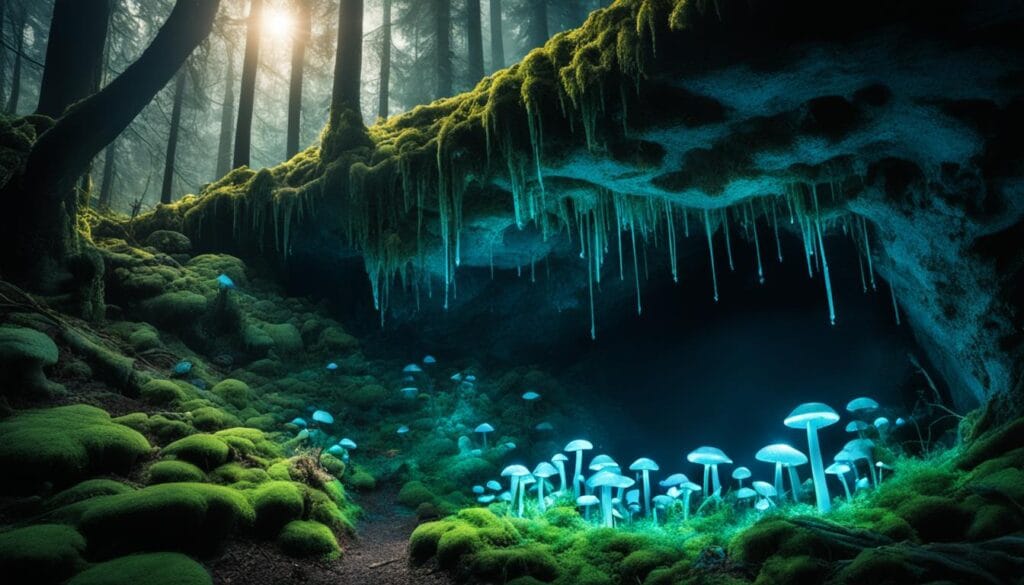
1. Plants warn their neighbors
When insects chew on plants such as tomatoes, lima beans or sagebrush, the plants release airborne chemicals. Nearby plants detect these signals and ramp up their own defenses before they are attacked. Read more in extraordinary facts about plants.
2. Forests may share resources underground
Tree roots partner with fungi that form huge underground networks, sometimes called the “wood wide web”. Experiments show carbon and nutrients can move between plants through these fungi. Scientists still debate how much trees actually help each other this way, so treat bold claims about “mother trees” with caution.

3. Honeybees understand zero
In a 2018 study, honeybees trained to choose images with fewer shapes also picked an empty image as “less than one”. That suggests insects with tiny brains can handle the concept of zero, an idea humans took thousands of years to formalize.
4. Dung beetles navigate by the Milky Way
Dung beetles roll their balls in straight lines to escape rivals. Researchers found they keep their bearings at night using the band of light from the Milky Way, the first known animal to use the galaxy for orientation.
5. Octopuses think with their arms
An octopus has around 500 million neurons, and about two-thirds of them are in its arms. Each arm can taste, touch and react with a surprising degree of independence.

6. Tardigrades can survive space
Tardigrades, or “water bears”, are animals less than a millimeter long. When dried out, they enter a state called cryptobiosis. In 2007 some survived being exposed to open space on a satellite mission, then revived back on Earth.
7. Elephants talk in sounds we can’t hear
Elephants make deep rumbles below the range of human hearing (infrasound). These low sounds can travel for kilometers, helping herds stay in touch across long distances.
8. Birds may see Earth’s magnetic field
Migrating birds can sense magnetic fields. A leading theory is that light-sensitive proteins called cryptochromes in their eyes let them “see” magnetic direction. Research on this is ongoing. Read more about how animals navigate.

9. Corals spawn together by moonlight
On the Great Barrier Reef, many corals release their eggs and sperm on the same few nights each year, a few days after a full moon in late spring. The timing depends on water temperature, day length and moonlight.
10. The Amazon makes its own rain
Trees pull water from the soil and release it through their leaves. Over the Amazon, this water vapor forms “flying rivers” that bring rain farther inland. A large share of the rain falling in parts of the basin is recycled this way, which is one reason deforestation can make the region drier.
Secrets of the natural world: frequently asked questions
What is the most surprising discovery in nature?
It depends who you ask, but insects handling the concept of zero and beetles navigating by the galaxy surprised many scientists.
Do trees really talk to each other?
Plants exchange chemical signals through the air, and roots connect through fungal networks. “Talk” is a metaphor, and scientists still debate how much trees cooperate underground.
What is the toughest animal on Earth?
Tardigrades are often called the toughest. In their dried-out state they can survive extreme cold, radiation and even the vacuum of space.
Related articles
- 10 extraordinary facts about plants
- 15 examples of migratory animals
- 10 amazing natural phenomena on Earth
- Mysteries of the deep sea
Sources
- Howard, S. R. et al. (2018). “Numerical ordering of zero in honey bees.” Science.
- Dacke, M. et al. (2013). “Dung beetles use the Milky Way for orientation.” Current Biology.
- Jönsson, K. I. et al. (2008). “Tardigrades survive exposure to space in low Earth orbit.” Current Biology.
- Karban, R. (2015). Plant Sensing and Communication. University of Chicago Press.
- Karst, J. et al. (2023). “Positive citation bias and overinterpreted results lead to misinformation on common mycorrhizal networks in forests.” Nature Ecology & Evolution.
- Howard et al. (2018), honeybees and zero, Science
- Dacke et al. (2013), dung beetles and the Milky Way, Current Biology
- Jönsson et al. (2008), tardigrades in space, Current Biology