
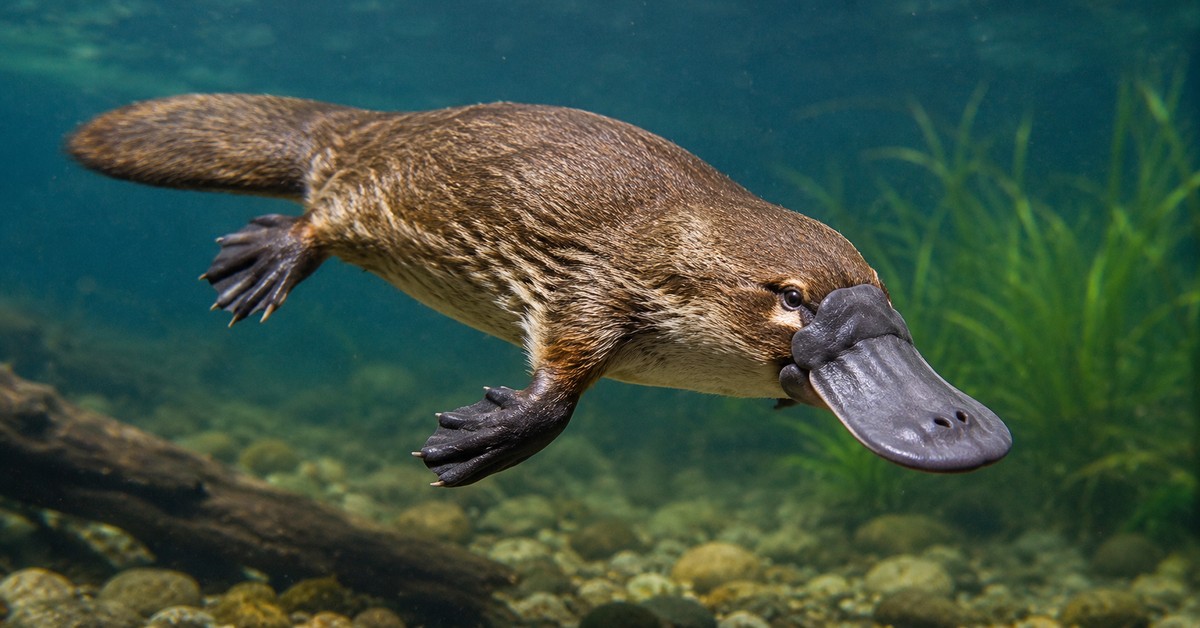
When European naturalists first encountered a platypus specimen in 1799, they suspected a hoax. The dried skin sent back to England appeared to be a beaver’s body with a duck’s bill sewn on. Scottish scientist George Shaw examined it carefully and still published a description of it, though he noted in his scientific paper that he had looked for signs of artificial manipulation. He found none.
The platypus was not a hoax. It was real. And 225 years later it remains one of the most biologically extraordinary animals ever documented. These platypus facts are not the kind you half-remember from childhood. They are the kind that make scientists rebuild their assumptions about what a mammal can be.
The platypus (Ornithorhynchus anatinus) breaks biology’s rules in ways that are not superficial. It is a mammal that lays eggs, hunts completely blind by sensing electricity, carries venom that resists morphine, has ten sex chromosomes where humans have two, and glows blue-green under ultraviolet light. Each of these traits is a separate evolutionary story, and each has produced research that changed medicine, genetics, or neuroscience.
Platypus Facts: What Makes This Animal Impossible to Classify
The platypus belongs to an ancient mammalian lineage called monotremes. Monotremes diverged from all other mammals approximately 166 million years ago, before the evolutionary split between marsupials and placental mammals. They retained features from their reptilian ancestors that all other mammal lineages later lost.
Today only five monotreme species survive: one platypus species and four echidna species. The platypus is the sole member of its family, Ornithorhynchidae. It has no close living relatives. Everything that makes the platypus unusual reflects 166 million years of independent evolution on an island continent, building a creature that fits no existing category cleanly.
Britannica’s platypus entry notes that when the platypus genome was sequenced in 2008 and published in Nature, researchers found that the genome itself is a mosaic: parts that resemble the reptile genome, parts that resemble the bird genome, and parts found only in mammals. The platypus is not a primitive mammal. It is a highly specialized one that chose a different path.
Fact 1: It Lays Eggs Despite Being a Mammal
Mammals are defined partly by giving birth to live young. The platypus ignored this rule entirely.
A female platypus lays one to three small, leathery eggs and incubates them by curling her body around them in a sealed burrow for approximately ten days. The eggs are soft and pliable, more like reptile eggs than bird eggs. At hatching, the young are tiny and undeveloped, similar in developmental stage to a marsupial joey at birth.
The mother nurses them, but she has no nipples. Milk seeps through pores in the skin of her abdomen and pools in grooves where the young lap it up. This is one of the most primitive nursing mechanisms in mammals, a living record of how lactation may have worked before nipples evolved. The platypus did not fail to evolve nipples. It diverged before nipples appeared in the mammalian lineage.
Fact 2: It Hunts Completely Blind Using Electricity
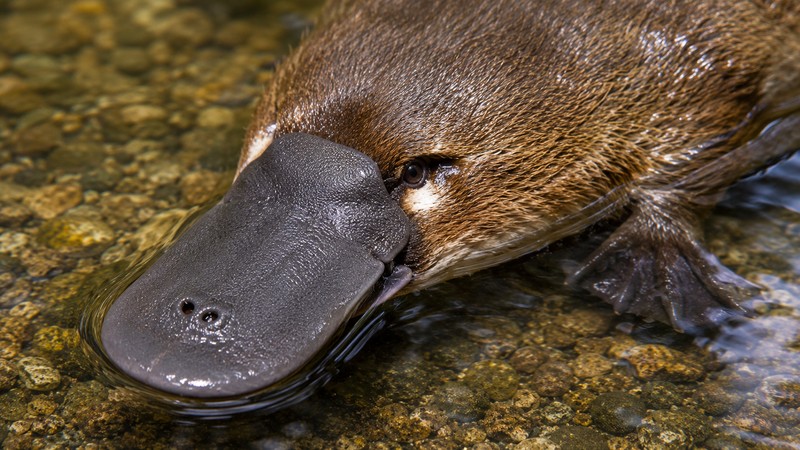
When a platypus dives, it seals its eyes, ears, and nostrils shut. It becomes completely cut off from three of its five senses simultaneously. Yet it locates, tracks, and captures fast-moving prey in murky water with extraordinary precision.
The bill achieves this. It is not rigid like a duck’s beak. It is soft, leathery, and packed with approximately 40,000 sensory receptors arranged in rows across the bill surface. These include mechanoreceptors that detect pressure waves in the water created by moving prey, and electroreceptors that detect the tiny electrical fields produced by muscle contractions in shrimp, worms, and insect larvae.
By swinging its head from side to side as it swims, the platypus compares signal strength across the electroreceptor array and triangulates the position of prey with high accuracy. The electrical fields it detects are extraordinarily faint, as low as 20 microvolts per centimeter. The platypus can detect the field produced by a single shrimp from several centimeters away in total darkness.
Electroreception of this sophistication exists in only a handful of other animals: sharks, rays, electric eels, and the duck-billed platypus. It did not inherit this ability from its mammalian ancestors. It evolved it independently, a classic example of convergent evolution producing the same solution in unrelated lineages facing the same hunting problem.
Fact 3: The Male Carries Venom That Defeats Morphine
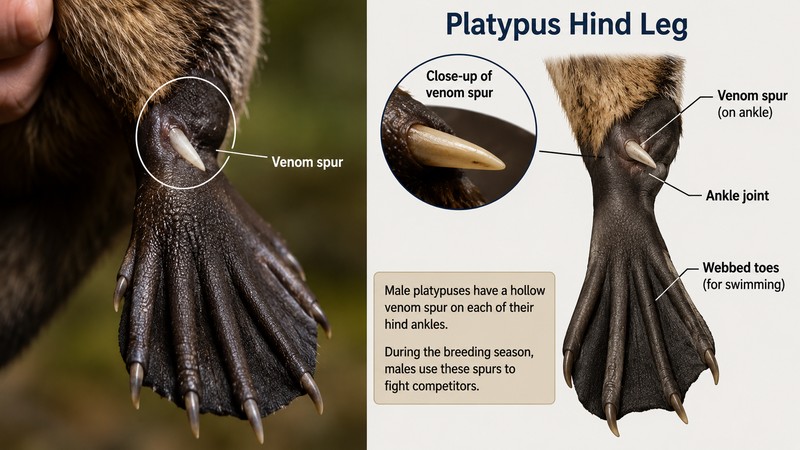
Male platypuses have a hollow, keratinous spur on each hind ankle connected by a duct to a venom-producing gland in the thigh. The venom system is fully functional, and the spurs are delivered with a muscular kick.
University of Melbourne venom research documents that the venom contains at least 19 different peptide compounds, several of which are found nowhere else in nature. The effects on humans are not lethal but are severe: immediate, excruciating pain that is specifically resistant to morphine, along with swelling and hypersensitivity that can persist for days to months.
Victims of platypus envenomation describe the pain as among the worst they have ever experienced. Standard opioid pain relief does not work. The mechanism involves peptides that directly activate pain receptors in a way that morphine cannot block. Doctors treating platypus stings typically resort to regional nerve blocks rather than systemic pain medication.
Venom production in males rises significantly during the breeding season and drops afterward. Females are born with vestigial spur buds that disappear before their first birthday and have no functional venom glands. The evidence strongly suggests the venom is a male competition weapon used during fights over territory and mates rather than a predator defense system.
Fact 4: That Same Venom May Treat Type 2 Diabetes
The platypus venom that defeats morphine also contains something unexpected: a long-lasting version of a hormone critical to glucose regulation.
GLP-1, glucagon-like peptide-1, is a hormone produced by both humans and platypuses that stimulates insulin release and lowers blood glucose after eating. In humans, GLP-1 degrades within minutes of release, limiting its therapeutic usefulness. In platypuses, the same hormone is encoded differently and persists far longer in circulation without breaking down.
Australian researchers studying platypus venom chemistry discovered this extended-stability GLP-1 variant and recognized its pharmaceutical potential. A modified form of human GLP-1 is already used in Type 2 diabetes treatment, but the rapid degradation problem limits its effectiveness. A platypus-derived version that resists degradation could form the basis of new diabetes medications that require less frequent dosing. Clinical applications are still in research stages, but the chemical foundation comes directly from platypus venom.
Fact 5: It Has Ten Sex Chromosomes
Human sex determination is simple. Females carry two X chromosomes. Males carry one X and one Y. Two chromosomes, one gene, one outcome.
Platypus sex determination is something else entirely. Female platypuses carry ten X chromosomes. Males carry nine X chromosomes and one Y chromosome. The full complement is 52 chromosomes per cell, with ten of them involved in determining sex.
The mechanism by which this ten-chromosome system determines sex was a 100-year scientific mystery. Research published in Genome Biology in 2025 finally identified the gene responsible for steering platypus embryos toward male development, a gene completely different from the SRY gene that performs the equivalent function in humans. The platypus evolved an entirely separate sex determination pathway from the one used by all other mammals.
When the platypus genome was sequenced in 2008, scientists found that some of its sex chromosomes share homology with bird sex chromosomes rather than mammalian ones, suggesting the platypus sex chromosome system may preserve features of an ancient vertebrate sex determination mechanism that all other mammals abandoned.
Fact 6: Its Fur Glows Blue-Green Under Ultraviolet Light
In 2020, researchers at Northland College in Wisconsin were systematically testing museum specimens of nocturnal mammals under ultraviolet light when they reached a mounted platypus from the Field Museum collection in Chicago. The fur glowed blue-green.
This phenomenon, called biofluorescence, involves the fur absorbing ultraviolet wavelengths and re-emitting them as visible light. Live Science’s report on the discovery notes that the researchers tested three separate museum specimens from different Australian locations. All three glowed. Both male and female specimens showed the same intensity and pattern of fluorescence.
Before this discovery, biofluorescence had been confirmed in only two other mammal groups: flying squirrels and opossums. Platypuses are the first and only monotreme known to glow.
What the glow is for remains unknown. Platypuses are most active at dawn, dusk, and into the night when UV levels are low. Whether they can even perceive UV or fluorescence is unresolved. One hypothesis suggests that fluorescence under the low UV of moonlight could help platypuses avoid detection by predators with UV-sensitive vision, since absorbing UV rather than reflecting it would make the animal less visible to those predators. Another possibility is that it serves a role in nocturnal social signaling. Current evidence does not distinguish between these or other explanations.
Fact 7: It Has No Stomach
Most vertebrates have a stomach, a dedicated organ that uses acid and enzymes to break down food before passing it to the intestine. The platypus does not.
Food passes from the platypus’s grinding mouth plates directly into a long intestine with no acid digestion stage in between. The stomach was lost, or more precisely, it was never developed in the monotreme lineage after their divergence from the common mammalian ancestor. Echidnas share this characteristic.
The platypus compensates partly by using coarse gravel and sediment particles it scoops up with prey. These grind food mechanically in the mouth as a substitute for the chemical breakdown a stomach would provide. Indigestible materials like hard shells and exoskeletons are spat out before swallowing.
This is not a limitation. The platypus has thrived for 166 million years without a stomach. It is simply a different digestive architecture, one that predates the evolution of gastric acid digestion in the mammalian line.
Fact 8: It Can Eat Up to 20% of Its Body Weight Per Day
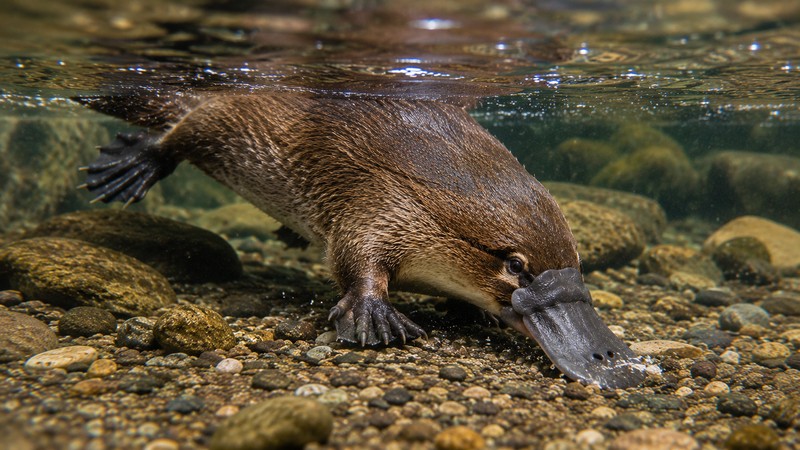
For an animal weighing roughly 1 to 2.4 kilograms, the platypus has an extraordinary metabolic demand. It can consume up to 20 percent of its body weight in prey every day.
This is driven by the energy cost of semi-aquatic life in cold freshwater environments. Swimming burns significant calories, and the platypus spends most of its active hours in the water. It forages in multiple dives per hunting session, each lasting roughly 30 to 140 seconds, surfacing briefly between dives to process prey using the gravel grinding mechanism in its mouth.
The primary prey are freshwater invertebrates: insect larvae, freshwater shrimps, worms, and crayfish called yabbies in Australia. The platypus does not chase fish. It hunts animals in the sediment and on the streambed, sweeping its bill from side to side across the substrate to detect electrical and pressure signals from buried or hidden prey.
Fact 9: Scientists Initially Thought It Was a Hoax
The reaction of the scientific establishment to the platypus is itself one of the most revealing platypus facts in this list.
When George Shaw published the first scientific description of the platypus in 1799, he was so suspicious that he physically examined the specimen for signs of stitching. He found none but remained cautious in his description. Over the following decade, European scientists who received additional specimens regularly suspected that Australian naturalists or sailors were constructing elaborate fakes for profit.
The combination of features, a beaver’s tail, an otter’s feet, a duck’s bill, and mammalian fur, all on a single animal, was simply outside the framework of what biologists understood to be possible. The assumption was that nature produced animals within recognizable categories. The platypus violated every category simultaneously.
It took decades and the work of multiple naturalists, including the detailed anatomical studies of Everard Home in the early 1800s and Richard Owen’s later work confirming egg-laying in the 1880s, before the scientific consensus fully accepted that the platypus was genuine and reproduced as described. The gap between first encounter and full scientific acceptance was approximately 90 years.
Fact 10: Its Bill Processes Two Completely Different Sensory Signals Simultaneously
The 40,000 receptors in the platypus bill are arranged in a way that allows the brain to process electroreception and mechanoreception as separate, parallel information streams.
Electroreceptors run in longitudinal rows along the bill. Mechanoreceptors are distributed across the bill surface. The platypus brain has a dedicated cortical region for integrating these signals, with a sensory map of the bill occupying a disproportionately large area of the sensory cortex, similar to how the human hand’s high receptor density gives it outsized representation in the human sensory cortex.
The integration of these two simultaneous sensory streams gives the platypus what researchers describe as a sixth sense for hunting. When an electrical signal and a pressure wave arrive from the same direction at the same moment, the brain can identify the precise location of a living prey animal with high confidence. The system is effective enough that the platypus never needs to use vision, hearing, or smell while hunting.
Fact 11: It Is Near Threatened and Declining
Despite surviving for 166 million years through multiple mass extinctions, the platypus faces a conservation threat it did not evolve to handle: rapid environmental change driven by human activity.
WWF Australia’s platypus conservation data notes that platypus populations have declined across much of their historical range due to habitat destruction, river regulation through dams, drought, climate change, and land clearing. The platypus requires healthy freshwater streams with natural banks for burrowing, clear water for hunting, and abundant invertebrate prey. All of these requirements are under pressure.
A 2020 study in the journal Biological Conservation modeled platypus populations under different climate change scenarios and recommended the platypus be uplisted from Least Concern to Vulnerable on the IUCN Red List, noting that declines of 47 to 66 percent in local populations had been documented in some catchments. The IUCN lists the species as Near Threatened, reflecting real concern but uncertainty about the population trajectory.
Fact 12: It Uses Its Tail as a Fat Reserve
The platypus tail, which looks superficially like a beaver’s tail, serves a different function. It is not used for swimming as a beaver uses its tail. The platypus swims with its front legs, using the hind legs and tail as a rudder.
The tail stores fat reserves that the animal draws on during periods of food scarcity or during the breeding and incubation season when foraging time is reduced. A fat, well-rounded tail on a platypus indicates good body condition. A thin tail is a sign of nutritional stress. Wildlife veterinarians assessing platypus health routinely evaluate tail condition as an indicator of overall nutritional status.
Fact 13: Platypus Milk Is Antibacterial
Mammalian milk is nutritious but vulnerable to bacterial contamination, which is why most mammals evolved nipples to deliver milk directly rather than pooling it on exposed skin. The platypus exposes its milk on the skin surface, which should make it extremely prone to bacterial growth in a riverine environment.
Research published in the journal Science found that platypus milk contains a unique three-dimensional protein structure not found in any other mammal’s milk. This protein, informally nicknamed the Shirley Temple protein by the research team, has potent antibacterial properties that protect the milk against contamination while it sits exposed on the mother’s belly skin. The same research suggests this protein could have pharmaceutical applications as an antibiotic agent, particularly relevant given growing bacterial antibiotic resistance.
Fact 14: It Has Hollow Melanosomes Like a Bird
Melanosomes are the microscopic pigment-making structures found inside skin and fur cells. For more than 50 years, scientists believed that mammal melanosomes were always solid, while bird melanosomes could be hollow.
Research published in 2026 found that platypus melanosomes are hollow, like a bird’s. This makes the platypus the only mammal known to have hollow melanosomes, a trait that until this discovery was considered exclusive to birds. The function of hollow versus solid melanosomes is not fully understood, but the discovery adds another item to the list of features that the platypus shares with the evolutionary lineage of birds and reptiles rather than with other mammals.
Fact 15: It Has Survived for 166 Million Years Largely Unchanged
Fossil evidence shows that platypus-like monotremes existed in Australia and South America during the Cretaceous period, alongside non-avian dinosaurs. The basic body plan and ecological strategy have remained recognizable across that span.
The earliest unambiguous fossil platypus, Monotrematum sudamericanum, was found in Argentina and dated to approximately 61 million years ago, confirming that monotremes once had a far wider geographic distribution than they do today. Modern platypuses are restricted entirely to eastern Australia and Tasmania.
The extraordinary longevity of the platypus body plan is a testament to how well-suited it is to its ecological niche. A semi-aquatic forager with electroreception, waterproof insulating fur, and the ability to survive cold freshwater environments represents a stable and effective life strategy. The platypus did not fail to evolve. It found a solution 166 million years ago and has not needed to change it significantly since. The same ecological patience that deep sea creatures demonstrate in their extreme environments applies to the platypus at the surface, where stability and specialization have proven more durable than constant adaptation.
Frequently Asked Questions
Are platypuses dangerous to humans?
Female platypuses and juveniles are harmless to humans. Adult male platypuses carry functioning venom spurs and should never be handled. The venom causes immediate, severe pain that is resistant to standard opioid pain relief, along with prolonged swelling and hypersensitivity. Deaths have not been documented from platypus envenomation, but injuries requiring medical treatment have occurred. Wildlife researchers handling platypuses for research use thick protective gloves and hold the animal from behind.
Do platypuses make sounds?
Platypuses are largely silent animals, but they can produce a soft, low growling sound when disturbed. They have no dedicated vocal structures comparable to the larynx in most mammals. The growling appears to be a general distress or warning signal rather than communication with social meaning. Platypuses are solitary and do not appear to use sound for mating, territorial defense, or parent-offspring communication in the way many other mammals do.
How long do platypuses live?
In the wild, platypuses typically live 11 to 17 years. Captive individuals have reached 21 years of age. Lifespan is influenced by food availability, predation risk, and water quality in their stream habitat. Natural predators include large owls, eagles, snakes, goannas, and introduced predators such as foxes and feral cats that take platypuses on land.
Can you keep a platypus as a pet?
No. Platypuses are protected native wildlife under Australian law and cannot be legally kept as pets by private individuals in Australia or exported to other countries for private ownership. They have also proven extremely difficult to keep in captivity even in professional zoo settings, with very few institutions worldwide having successfully maintained platypuses long-term. Their specialized dietary needs, behavioral requirements, and sensitivity to water quality make captive care enormously demanding.
Why does the platypus have webbing on its feet if it swims with its front legs?
The front feet have larger webbing that extends beyond the toes and is used for swimming, providing a broad paddle surface. The hind feet have smaller webbing and are used more for steering and as a stabilizer. On land, the front feet retract the webbing by folding it back against the foot, exposing the claws for digging. The platypus uses those same front feet to excavate burrows up to 30 meters long in riverbanks for shelter and nesting. The retractable webbing allows the same feet to function effectively in water and on land.
How does the platypus relate to other unusual animals?
The platypus belongs to a broader group of animals that challenge common assumptions about how biology works. The deep sea is full of creatures that use bioluminescence and extreme pressure adaptations in ways as counterintuitive as electroreception. The extraordinary facts about animal behavior and adaptation visible in animals like cats also reflect millions of years of independent evolution producing solutions that look strange by human standards but are optimally suited to their ecological context.
The One-Paragraph Answer
The platypus is a mammal that lays eggs, nurses young through skin pores without nipples, hunts completely blind using 40,000 electroreceptors that detect electrical fields from prey, carries venom that resists morphine in the hind ankle spurs of males, has ten sex chromosomes where humans have two, glows blue-green under ultraviolet light for unknown reasons, has no stomach, and shares melanosome structure with birds rather than mammals. Its venom contains a long-lasting version of a hormone used in diabetes treatment. Its milk contains antibacterial proteins unlike any other mammal. Its genome is part reptile, part bird, part mammal. It diverged from all other mammals 166 million years ago and has survived essentially unchanged through multiple mass extinctions. When European scientists first saw a specimen in 1799, they thought it was a fake. They spent 90 years trying to explain it before accepting that the platypus is exactly what it appears to be: an animal that broke every rule of biology and then thrived for over 100 million years because of it.