
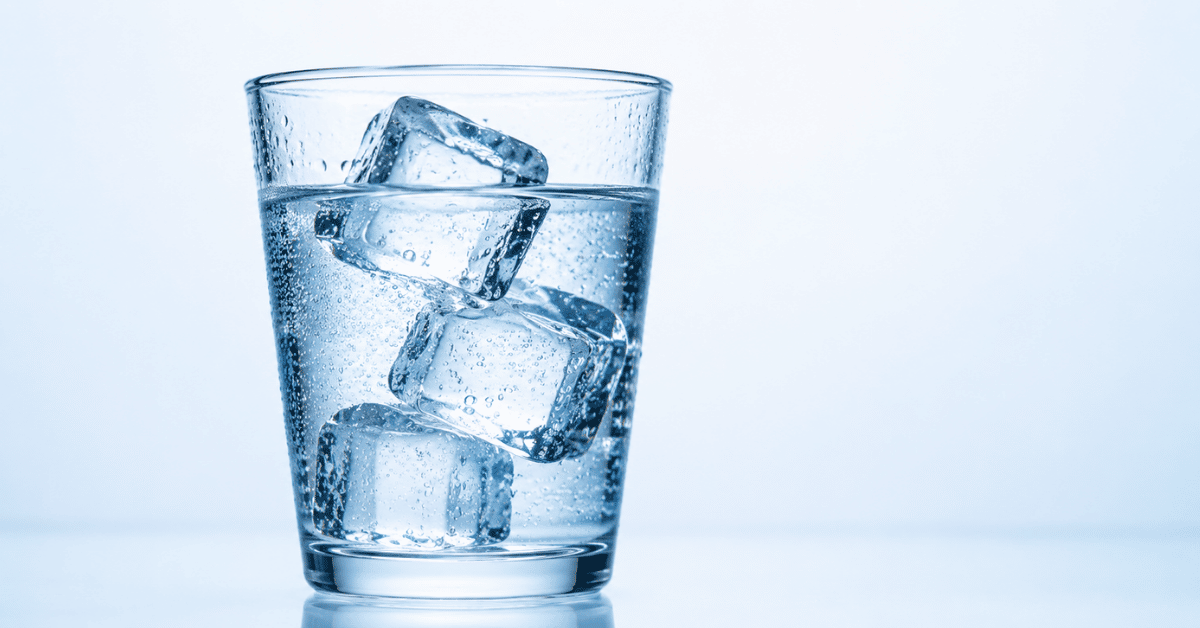
Quick answer: Ice floats because it is less dense than liquid water. When water freezes, hydrogen bonds lock its molecules into an open, hexagonal pattern, so ice takes up about 9% more space than the same amount of liquid water. Ice has a density of about 0.92 g/cm³ compared with about 1.00 g/cm³ for water, so it floats with roughly 90% of its volume below the surface.
Exam answer: why does ice float on water?
Two-mark answer (class 9, AP Biology or GCSE): When water freezes, hydrogen bonds hold each water molecule in a fixed, open hexagonal lattice. The molecules end up farther apart than in liquid water, so ice has a lower density (about 0.92 g/cm³) than liquid water (about 1.00 g/cm³). Anything less dense than the liquid it is in floats, so ice floats.
Why it matters: floating ice insulates the water below, so lakes freeze from the top down and aquatic life survives winter. Read more: what would happen if ice didn’t float.
Why does ice float on water instead of sinking to the bottom? Almost every other solid substance sinks in its own liquid form. Drop a piece of solid iron into molten iron and it sinks immediately. Freeze most liquids and the solid will drop straight to the bottom. Water breaks this rule completely.
Ice floats because of a structural accident built into the water molecule itself. When water freezes, its molecules lock into a hexagonal crystal lattice held together by hydrogen bonds. That lattice takes up more space than the same number of molecules moving freely in liquid water. More space means lower density. Lower density means ice floats.
That simple mechanism has shaped life on Earth. Without it, lakes and rivers would freeze solid from the bottom up every winter, destroying every aquatic ecosystem on the planet. The question of why does ice float turns out to have one of the most consequential answers in all of chemistry. Here is exactly how it works, along with 7 facts that reveal just how unusual water really is.
Why Does Ice Float: The Density Answer
The direct answer: ice is about 9% less dense than liquid water. Density is mass divided by volume. A cubic centimeter of liquid water weighs 1.00 gram. A cubic centimeter of ice weighs 0.917 grams. Because ice is lighter for the same volume, it sits on top of liquid water rather than sinking through it.
This is Archimedes’ principle in action. Any object less dense than the liquid it sits in will float. Objects denser than the liquid sink. Ice sits at 0.917 g/cm3, water sits at 1.00 g/cm3, so ice floats. About 91% of an ice cube sits below the water surface and 9% sits above it. That is why icebergs look small above water because their vast bulk is hidden underneath.
The real question is not why ice floats. It is why ice is less dense than water in the first place. The answer requires understanding what happens inside a water molecule when it freezes. This same density principle explains the ocean’s behaviour in extreme depth environments, where pressure and temperature create unusual water behaviour miles below the surface.
The Water Molecule and Why It Behaves Differently
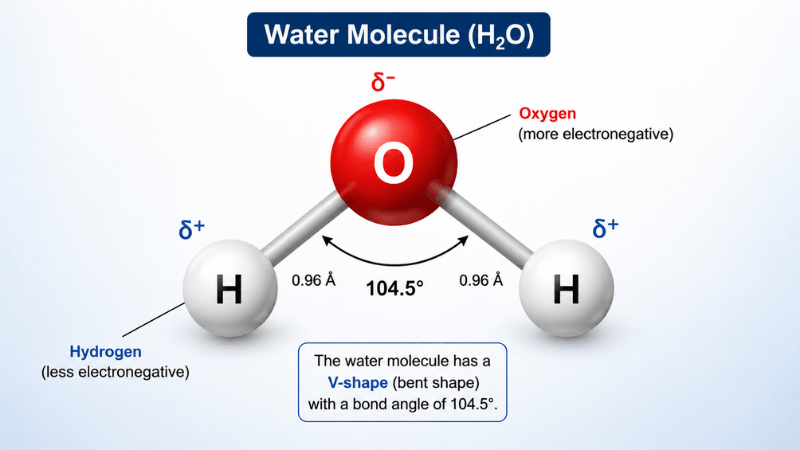
A water molecule is shaped like a shallow letter V. One oxygen atom sits at the apex. Two hydrogen atoms sit at the arms. They are held together by covalent bonds, where the oxygen and hydrogen atoms share electrons.
Oxygen pulls on those shared electrons far more strongly than hydrogen can. The result is that the electrons spend more time near the oxygen end of the molecule, giving that end a slight negative charge. The hydrogen end carries a slight positive charge. The molecule is electrically unbalanced.
That imbalance creates hydrogen bonds. The slightly positive hydrogen end of one water molecule is attracted to the slightly negative oxygen end of a neighbouring molecule. In liquid water, these bonds form and break millions of times per second as molecules move past each other. The liquid stays fluid because no bond lasts long enough to lock molecules in place.
When the temperature drops to 0 degrees Celsius, the molecules slow down enough that the hydrogen bonds become permanent. The molecules lock into position relative to each other, and the liquid becomes solid ice.
The Hexagonal Lattice: Where the Extra Space Comes From
When water freezes, the hydrogen bonds do not just hold molecules together randomly. They arrange each molecule in a very specific geometry. Each water molecule forms four hydrogen bonds with four neighbouring molecules at fixed angles. That geometry forces the molecules into a hexagonal lattice, a repeating six-sided ring pattern that extends through the entire ice crystal.
That hexagonal structure is the key. Chemistry LibreTexts at UC Davis explains that the hexagonal channels in ice create open space, essentially empty corridors running through the crystal. In liquid water, the hydrogen bonds break and reform constantly, allowing molecules to pack more closely together. In ice, the rigid lattice locks those empty channels in place permanently.
The result is counterintuitive: the more organised, rigid solid form of water takes up more space than the disorganised liquid form. Most substances pack more tightly when they solidify because their molecules slow down and settle into compact arrangements. Water does the opposite. The hydrogen bond geometry forces molecules further apart, not closer together.
Freeze a given mass of water and the resulting ice occupies about 9% more volume than the liquid water did. Same mass, more volume, lower density. That is why ice floats.
7 Surprising Facts About Why Ice Floats and Water Is Unique
Fact 1: Water reaches maximum density at 4 degrees Celsius, not at freezing point
Water does not get continuously denser as it cools. It reaches its maximum density at exactly 4 degrees Celsius, then becomes less dense as it cools further toward 0 degrees. Britannica’s chemistry resource notes this is why the bottom of deep lakes stays at 4 degrees Celsius year-round. The densest water sinks to the bottom and stays there, creating a stable temperature layer that aquatic life depends on.
Fact 2: Ice expands by 9% when water freezes
When liquid water at 0 degrees Celsius freezes into ice, its volume increases by approximately 9%. This is why water pipes burst in winter. The ice forming inside the pipe expands with enough force to split metal. The same expansion is what makes the ice less dense and causes it to float.
Fact 3: Ice always floats with 91% submerged
Because ice is 91.7% as dense as liquid water, exactly 91.7% of any floating ice sits below the waterline. This applies to an ice cube in a glass and to a 10-kilometre-long Antarctic iceberg. The ratio is fixed by density. When the Titanic hit an iceberg in 1912, the visible portion above water represented only about 8% of the total ice mass.
Fact 4: If ice sank, life on Earth would be completely different
If water behaved like other substances and its solid form sank, the consequences for life would be severe. Lakes and rivers would freeze from the bottom up in winter. Ice would accumulate on the lake bed and never fully melt because deep water stays cold even in summer. Over time, most standing freshwater bodies in cold climates would become permanently frozen solid, eliminating freshwater ecosystems entirely. The fact that aquatic animals and plants survive winter beneath the ice is entirely due to the floating insulating ice layer above them.
Fact 5: Ice is one of very few solids less dense than their liquid form
Among common substances, water is almost unique in having a solid form less dense than its liquid. Silicon, germanium, bismuth, and antimony also show this property, but water is the most common and ecologically significant example. The behaviour is so unusual that it was considered an anomaly for years before chemists understood the hydrogen bond mechanism behind it.
Fact 6: Pressure can melt ice
Because ice is less dense than liquid water, applying pressure to ice encourages it to shift back to the denser liquid phase. Ice skating works partly on this principle. The blade applies intense pressure to a narrow line of ice, lowering the melting point slightly and creating a thin lubricating film of liquid water. This is the Clausius-Clapeyron relationship, and water is one of the only substances where pressure causes the solid to melt rather than compress further.
Fact 7: Water absorbs unusual amounts of heat when it melts
The same hydrogen bonds that create the hexagonal lattice also make ice require an extraordinary amount of energy to melt. Breaking the hydrogen bonds that hold the crystal lattice together requires 334 joules of energy per gram of ice, far more than most solids require. This high latent heat of fusion is why ice keeps drinks cold for hours and why glaciers melt slowly despite warming temperatures. The bonds that make ice float also make it thermally stubborn.
Why Most Solids Sink But Ice Floats
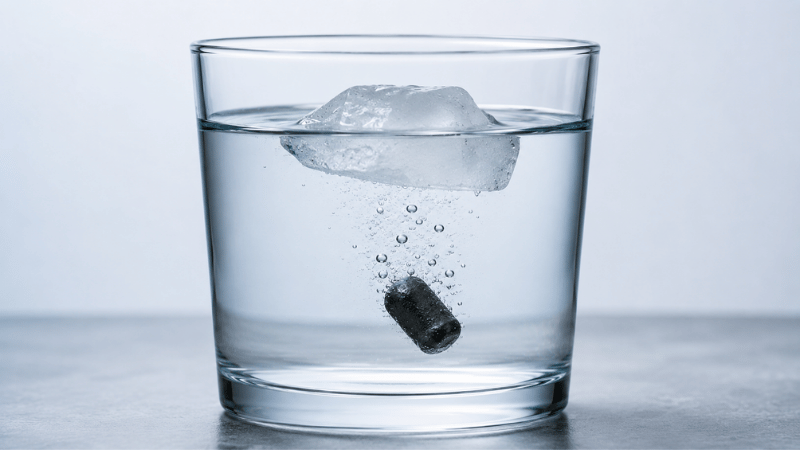
The reason almost every other solid sinks in its own liquid is straightforward. When a liquid cools and solidifies, the molecules slow down and pack together more tightly. Tighter packing means more mass in the same space, which means higher density. A denser solid placed in its less-dense liquid sinks.
Iron in molten iron. Wax in liquid wax. Alcohol ice in liquid alcohol. Gold in molten gold. All of them sink. The solid is always denser than the liquid in normal substances because cooling slows molecules and tightens packing.
Water reverses this only because of the specific geometry of the hydrogen bond. The four-bond tetrahedral arrangement forces water molecules into a lattice that leaves more empty space than the disordered, constantly-rearranging structure of liquid water. It is not a general property of water. It is a consequence of one specific molecular interaction. BBC Science Focus Magazine notes that if hydrogen bonds in water were even slightly more rigid, the liquid would actually be less dense than ice and the floating property would disappear entirely.
What Happens to Life When Ice Floats
The ecological importance of ice floating cannot be overstated. In winter, the surface of a lake cools first. As surface water reaches 4 degrees Celsius and becomes maximally dense, it sinks. Slightly warmer, less dense water rises to replace it. This circulation continues until the entire lake is at 4 degrees Celsius from surface to bottom.
At that point, further cooling reduces density, so cold water stays at the surface rather than sinking. When the surface reaches 0 degrees Celsius, it freezes. The ice layer sits on top of the liquid water below, acting as an insulating blanket that slows further freezing of the water below it.
Fish, plants, insects, and microorganisms survive the winter in the liquid water beneath that insulating ice layer. The water temperature under the ice stays close to 4 degrees Celsius all winter, cold but liquid. Without floating ice, this insulating layer would not exist. Freezing would penetrate all the way to the lake bed. Most freshwater life as it currently exists would not survive.
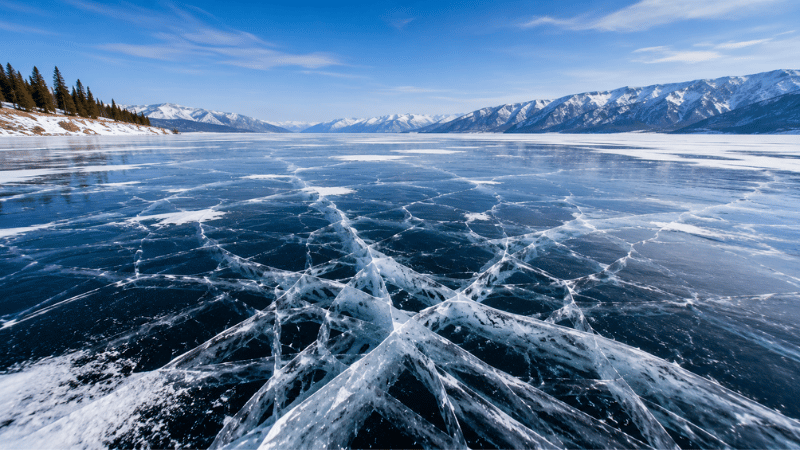
The same principle applies at a planetary scale. Earth’s polar oceans freeze from the surface down. Floating ice caps reflect sunlight back into space, regulating global temperature. If sea ice sank, the dark liquid ocean would absorb more solar heat, accelerating warming in a feedback loop. The connection between the unusual properties of water and the Earth’s climate system runs deeper than most people realise.
Frequently Asked Questions

Why does ice float but most other solids sink?
Most solids are denser than their liquid form because cooling causes molecules to pack tightly together. Water is different because hydrogen bonds force molecules into a hexagonal crystal lattice when they freeze. That lattice contains empty channels, giving ice more volume and less density than liquid water. No other common substance behaves this way for the same reason.
What would happen if ice did not float?
If ice sank, lakes would freeze solid from the bottom up in winter. The ice would accumulate on the lake bed rather than forming an insulating surface layer. Most freshwater ecosystems could not survive. Ocean ice would also sink rather than float, eliminating polar ice caps and dramatically accelerating climate warming. Life on Earth would look fundamentally different.
Does all ice float in all liquids?
No. Ice floats in liquid water because ice is less dense than water. In a denser liquid, such as a very salty solution or certain industrial fluids, ice can sink because the liquid is denser than the ice. Ice cubes actually sink in some heavy brine solutions used in food processing. Whether ice floats depends entirely on the density of both the ice and the liquid in question.
Why is water densest at 4 degrees Celsius and not at 0 degrees?
Between 0 and 4 degrees Celsius, two competing effects operate simultaneously. Cooling causes molecules to slow down and pack more closely together, increasing density. But cooling also allows hydrogen bonds to form more stable, space-taking structures. Below 4 degrees, the hydrogen bond structuring effect wins and density starts decreasing. At exactly 4 degrees these two forces balance and density reaches its maximum before the structure-forming effect begins to dominate.
Why does the ice float in my drink end up at the top?
Ice cubes in a drink float for the same reason ice floats on a lake. The density of ice at 0.917 g/cm3 is lower than water or any water-based drink at approximately 1.00 g/cm3. The difference in density creates a buoyant force that pushes the ice upward, and the ice rises until 91% is submerged and 9% sits above the liquid surface. Cold drinks stay cold longer because the cold ice sits at the top and chills the liquid through convection as cold dense water sinks from below the ice.
Is ice floating on water rare in the universe?
Yes. Water’s combination of hydrogen bonding, polar molecular structure, and the resulting density anomaly makes it genuinely unusual. Most planetary scientists believe that liquid water with floating ice is rare in the universe, contributing to the current thinking that Earth’s combination of conditions for complex life is itself extraordinary. The search for extraterrestrial life focuses heavily on finding water precisely because of these extraordinary properties.
The One-Paragraph Answer
Ice floats on water because hydrogen bonds force water molecules into a hexagonal crystal lattice when they freeze, creating empty channels that give ice 9% more volume and 9% less density than liquid water. That lower density means ice sits on top of water rather than sinking through it. The same hydrogen bonds that cause ice to float also make water thermally stable, make ice absorb huge amounts of heat when melting, and make water reach maximum density at 4 degrees Celsius rather than at freezing point. None of these properties exist in most other substances. Together they create the insulating ice layer that allows aquatic life to survive winter, regulate the planet’s temperature, and make liquid water and the life that depends on it possible on a cold planet orbiting an average star.
Related articles
- What would happen if ice didn’t float?
- Why is the ocean salty?
- Why is the sky blue?
- 10 weird science facts that are true
Sources
- Chemistry LibreTexts at UC Davis
- Encyclopaedia Britannica: Britannica's chemistry resource
- BBC Science Focus Magazine